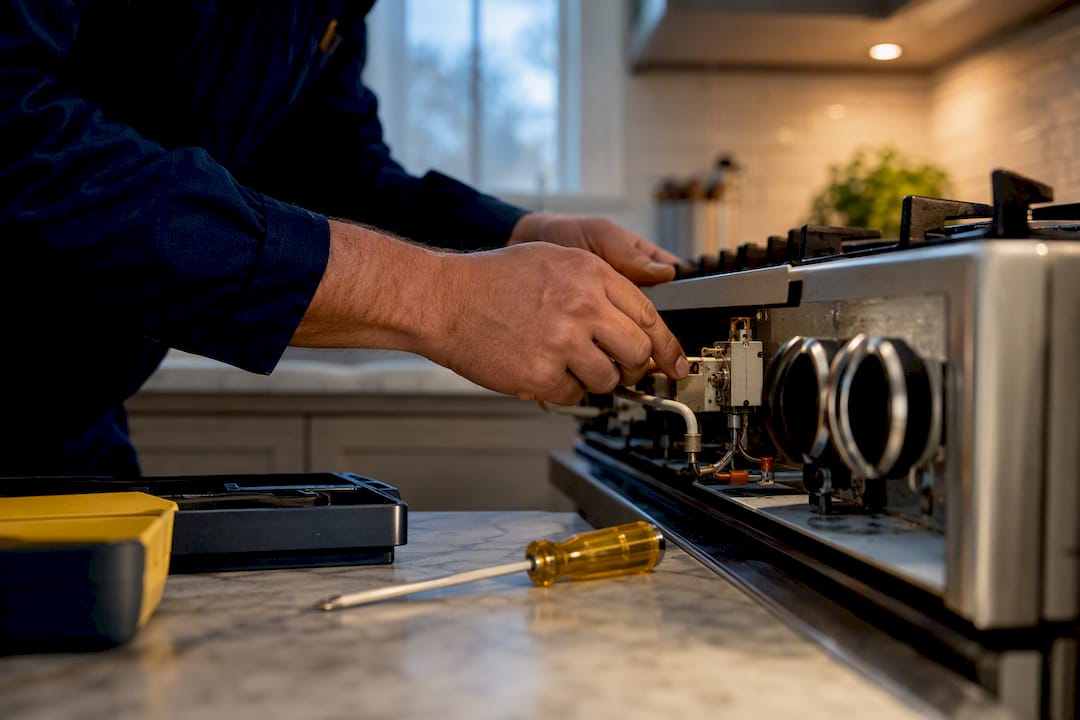
Most stove repairs cost $150 to $400 all in, once you add parts, labor, and a diagnostic fee. If the quote comes back higher than half the price of a comparable new range, replacement is often the better long-term choice. The one exception that overrides everything else: any gas odor, unusual flame color, or symptoms like headache or nausea near the stove are emergencies requiring immediate gas shutoff and contacting the utility.
TL;DR:
- Repairs for stoves generally cost between $150 and $400, but replacement is more cost-effective if the quote exceeds half the price of a new unit.
- Most common issues, like heating elements or oven igniters, cost $150 to $325 to fix, while control boards and glass cooktops can cost up to $600 or more.
- Gas stove repairs tend to be more expensive due to safety testing and leak checks, while electric coil repairs are usually quicker and cheaper.
- The final cost depends heavily on labor rates, the stove’s age and brand, access difficulty, and whether emergency or after-hours fees apply.
- Immediate gas odors or symptoms of carbon monoxide exposure require urgent shutdown and utility contact, not repair scheduling.
Table of Contents
- What Does Stove Repair Cost? A Quick-Reference Breakdown
- What Are the Most Common Stove Repairs and Their Costs?
- Does Repair Cost Change by Stove Type?
- What Actually Drives Your Final Bill?
- Repair or Replace? The 50% Rule Explained
- How Can You Lower Your Stove Repair Cost?
- What Should You Ask Before Approving a Stove Repair Quote?
- Why Experience Behind the Wrench Matters More Than the Price Tag
- Ready to Get a Straight Answer on Your Stove Repair?
- Sources
- FAQ
What Does Stove Repair Cost? A Quick-Reference Breakdown
Here’s what you’re actually paying for when a technician hands you an invoice.
- Diagnostic/service call fee: $75 to $150, often credited toward the repair if you approve the work on the spot.
- Labor: $50 to $125 per hour, with most jobs wrapping up in one to two hours.
- Parts: ranges wildly by component, from a $10 knob to a $600 control board.
- Add-ons: travel charges, emergency or after-hours rates, and removal fees for old parts can tack on another $25 to $100.
Electric ovens tend to average around $200 for a full repair, while gas ovens run closer to $250, according to UseCalcPro’s 2026 repair cost data. On the low end, you might pay $80 for a knob swap. On the high end, a control board replacement on a built-in wall oven can push past $700 once labor and access difficulty are factored in.
What Are the Most Common Stove Repairs and Their Costs?
The failure that brings most people to a repair site isn’t exotic. It’s usually one of five things.
- Heating or bake element: the classic symptom is uneven cooking or an oven that won’t heat at all. Installed cost runs $150 to $450, and this is genuinely one of the easier DIY jobs on an electric range since the element usually just unplugs and unscrews.
- Oven or surface igniter: if your gas oven clicks and clicks but never lights, the igniter is the usual suspect. Expect $150 to $325 installed. This is not a DIY repair. Igniters sit right next to the gas valve, and a bad reinstall can create a leak.
- Control board: when the display goes dark or buttons stop responding, you’re likely looking at $150 to $600. Boards themselves aren’t always expensive, but labor matters here because a technician has to correctly diagnose whether the board is actually the problem, not a sensor or a wiring fault feeding it bad signals.
- Glass or ceramic cooktop: costs spread from $200 to $1,000 depending on whether you have tempered glass or ceramic glass over induction elements. A single crack from a dropped pan can mean full replacement, since these tops aren’t patchable.
- Knobs, drip pans, hinges, and thermostats: these are the good news items. Most run $10 to $60 in parts and take five minutes to swap yourself with no tools beyond a screwdriver.
Pro Tip: Before you book a technician for a “won’t heat” complaint, check whether it’s actually a tripped circuit breaker or a blown thermal fuse. It happens more often than homeowners expect, and it costs you nothing to check.
Does Repair Cost Change by Stove Type?
Your stove’s fuel source and design shift the numbers more than most people realize.
- Gas ranges tend to run higher on average because igniter and valve work requires leak testing and safety verification on top of the actual repair, a step electric repairs skip entirely.
- Electric coil or radiant element repairs are usually the cheapest and fastest fix in this whole category, often under an hour of labor.
- Induction and glass-top repairs trend higher because the electronics and specialized glass are pricier to source than a standard coil element.
- Built-in or wall oven units carry a labor premium simply because pulling them out of cabinetry takes more time than servicing a freestanding range.
What Actually Drives Your Final Bill?
Two identical-looking repairs can cost very different amounts, and it usually comes down to four factors.
Labor rates commonly fall between $50 and $150 per hour, and since many jobs are completed within a few hours, labor often makes up more of the invoice than the part itself. A $40 igniter with 90 minutes of labor at $100 an hour costs more in labor than in parts, and that surprises a lot of people who assumed the part was the expensive piece.
Brand and age matter too. Older stoves, especially discontinued models, often carry a parts premium because the component isn’t mass-produced anymore, and control boards for premium brands may be more expensive. Access complexity adds cost when a unit is built into cabinetry or wedged into a tight kitchen corner, and travel or after-hours fees stack on top of whatever the base labor rate already covers.
Pro Tip: Ask upfront whether the diagnostic fee gets credited toward the repair if you approve the work. Most companies do this, but not all, and it’s a fair question to ask before the technician even arrives.

Repair or Replace? The 50% Rule Explained
The math here is simple. If a comparable new range costs $800 and your repair quote comes in at $450, you are past the halfway mark, and replacement is usually the smarter long-term move. If that same quote were $250, repair clearly wins.
Lifespan matters here too. Gas ranges commonly last 13 to 15 years, and a repair on a stove already past that mark is a harder sell than the same repair on a five-year-old unit.
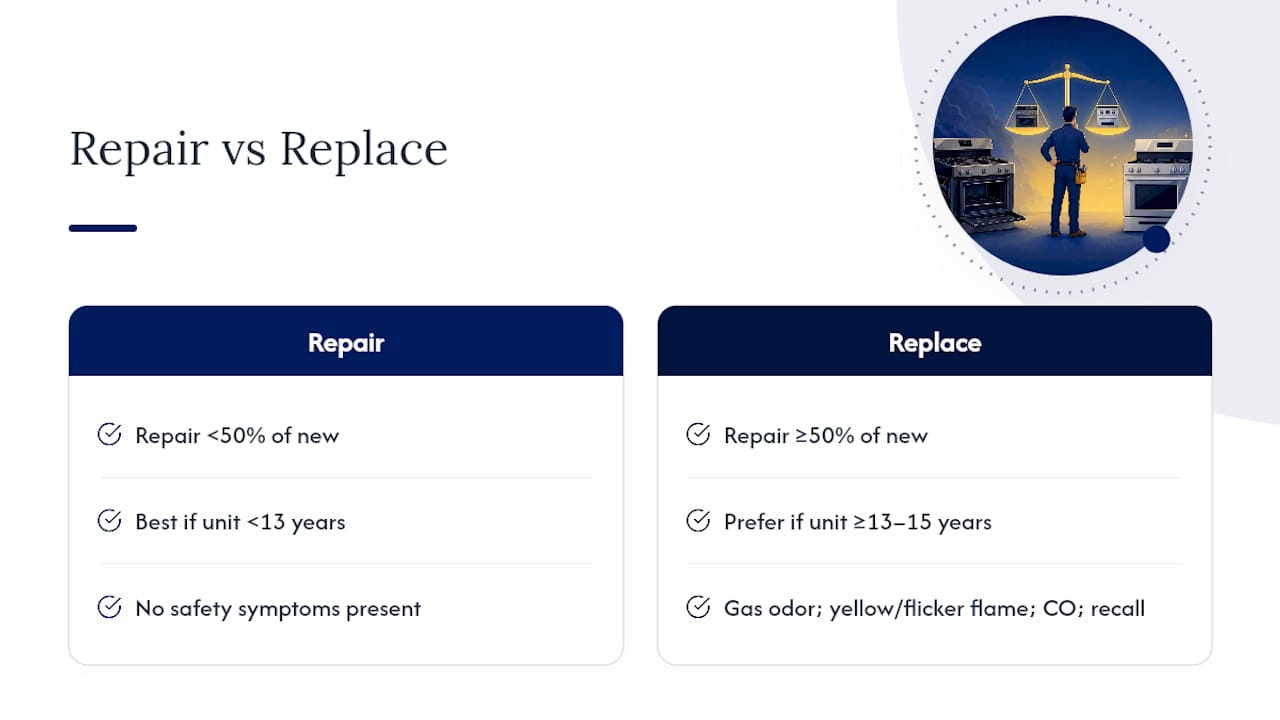
Skip the math entirely and replace immediately if you notice a persistent gas odor, a yellow or flickering flame instead of blue, symptoms of carbon monoxide exposure, or an active manufacturer recall on your model.
How Can You Lower Your Stove Repair Cost?
- Check your warranty and any open recall notices before paying for a diagnostic visit. This step alone has saved plenty of homeowners a full repair bill.
- Handle the easy stuff yourself: knobs, drip pans, and oven light bulbs rarely need a technician.
- Source your own replacement part when the model is common. You’ll often beat the marked-up price a technician’s supplier charges.
- Never touch a gas valve, igniter, or internal wiring yourself. Call a licensed technician for anything involving your stove’s gas line or electrical internals.
Pro Tip: A quick online search for your model number plus “recall” takes thirty seconds and can turn a $300 repair into a free one.
What Should You Ask Before Approving a Stove Repair Quote?
A written estimate protects you more than any verbal promise. Before you sign off on anything, ask for the specific part number being replaced, the estimated labor hours, and the warranty terms on both the part and the labor.
- Confirm whether the diagnostic fee gets credited toward the final bill if you approve the repair.
- Watch for vague, unitemized pricing or a technician who recommends replacing an expensive control board without actually testing it first.
- Ask for proof of license and insurance, especially for any gas-related work, and don’t accept a verbal-only quote for a job involving your gas line.
- If the issue touches the gas valve or burner assembly, confirm the technician is specifically licensed for gas appliance work, not just general appliance repair.
Why Experience Behind the Wrench Matters More Than the Price Tag
Cost ranges only tell half the story. The other half is whether the person handing you that invoice actually knows what they’re doing. An experienced appliance repair service with many years in the industry typically provides skilled diagnosis and efficient repair.
This type of operation often emphasizes transparent pricing and clear communication about repair costs before work begins. Many reputable repair services offer a warranty on parts and labor to ensure quality of the repair. A cheap repair that fails in month three isn’t actually cheap. Comprehensive appliance repair services typically cover a range of household appliances, allowing technicians to handle various related repairs.
— Rich
Ready to Get a Straight Answer on Your Stove Repair?
If you’re staring down a stove that won’t heat or a cracked glass top and don’t want to gamble on a vague quote, A reliable appliance repair service often provides honest, itemized estimates based on technician experience rather than guesses. Extensive experience in appliance repair tends to result in fewer callbacks and more accurate billing. Warranties on parts and labor provide customers with confidence that repairs will be durable. Check out the full range of appliance repair services or head straight to the oven and stove repair page to request your written estimate and get a technician scheduled.
Sources
- Oven Repair Cost Calculator — 2026 Stove & Range Repair Estimator | UseCalcPro
- Repair vs replace gas stove (StoveShield)
- How Much Does It Cost to Repair a Stove? 2026 Data | Angi
FAQ
How much does it cost to fix a stove?
Most stove repairs cost $150 to $400 all in, including a $75 to $150 diagnostic fee and labor billed at $50 to $125 per hour. Simple fixes like knobs or drip pans cost far less, while control board or glass cooktop replacements can push past $600.
What is the average lifespan of a stove?
Gas ranges commonly last 13 to 15 years with regular maintenance. Electric ranges often follow a similar timeline, though heavily used units may show wear sooner.
What is the 50% rule for appliance repair?
A $450 repair on an $800 replacement range, for example, sits right at that threshold.
Is it worth fixing a 20-year-old stove?
Generally, no. Any safety-related issue, like a gas smell or a struggling igniter, makes replacement the safer call at that age.
Is it safe to smell gas near my stove?
No. A gas odor is an emergency, not a repair scheduling issue. Turn off the gas supply, leave the house, and call your gas utility before contacting anyone about a repair.