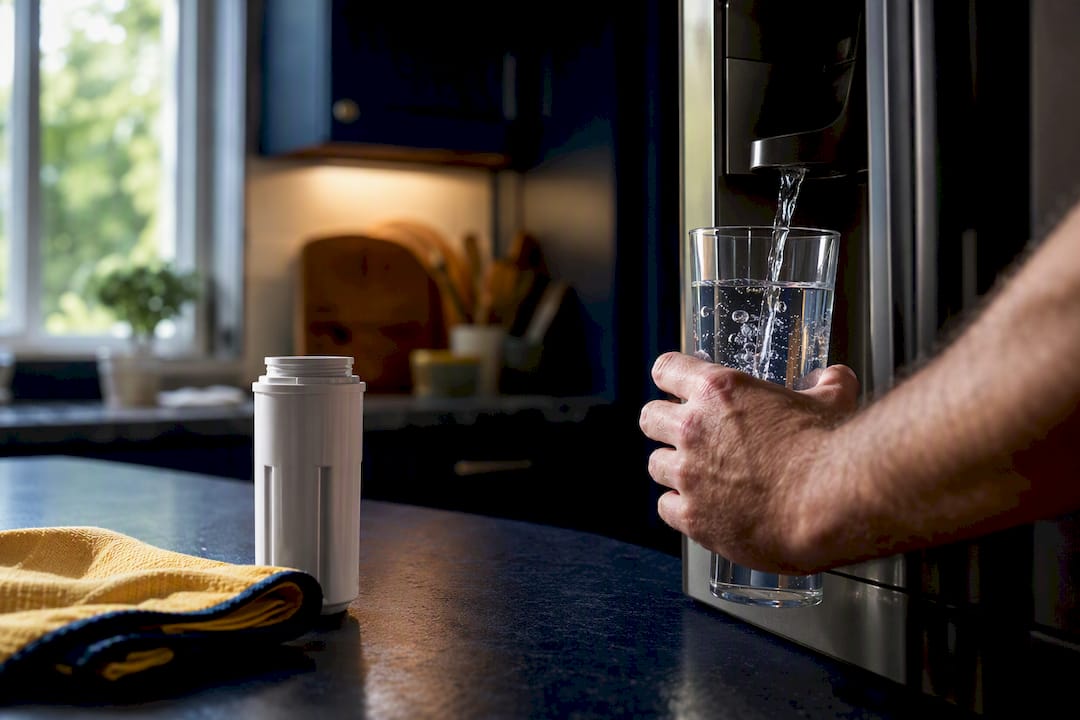
If your refrigerator water tastes bad, the culprit is almost always a saturated filter, stagnant lines, or your home’s own water supply. Start by comparing kitchen sink water to what comes out of the dispenser. If they taste the same, the problem lives upstream in your plumbing. If only the fridge water tastes off, replace the filter and flush roughly 2.5 to 3 gallons through the lines before you troubleshoot anything else.
TL;DR:
- Replacing the filter and flushing 2.5 to 3 gallons of water are essential steps to remove trapped air, carbon dust, or manufacturing residues that cause off-tastes.
- If both sink and dispenser water taste the same, the home’s water supply is likely the source of the issue, not the refrigerator itself.
- Plastic or braided tubing materials, as well as new appliance components, can leach tastes into the water, especially if the lines haven’t been fully flushed during installation.
- Regular maintenance tasks like cleaning the ice bin and wiping the dispenser nozzle every few weeks help prevent odor transfer and buildup that can affect taste.
- Persistent off-taste after filter replacement, flushing, and cleaning indicates a potential plumbing problem or internal component failure requiring professional diagnosis.
Table of Contents
- Fast Fixes to Try Before You Diagnose Anything
- Why Fridge Water Tastes Bad: Filters, Supply, Tubing, and More
- A Step-by-Step Way to Track Down the Problem
- Keeping Your Fridge Water Tasting Right Going Forward
- What Repair Visits Actually Look Like
- Why Manufacturer Advice Only Gets You Halfway There
- Get Professional Help When DIY Fixes Don’t Work
- Manufacturer and Public Health Resources Worth Checking
- Sources
- FAQ
Fast Fixes to Try Before You Diagnose Anything
Most bad-tasting refrigerator water is solved in the first ten minutes, not after a full teardown. Work through these in order before assuming something is broken.
- Swap the filter and flush the lines. Install a new filter, then dispense about 2.5 to 3 gallons of water and discard it. That volume matters. Manufacturer support pages consistently point to this range because it clears trapped air and loose carbon dust left behind by a fresh filter, which is exactly what causes that chalky or plastic taste right after a filter swap.
- Taste-test the sink against the dispenser. Fill a glass from the kitchen faucet, then one from the fridge. If both taste the same, your appliance isn’t the problem; your home’s water supply is.
- Clean the ice bin and wipe the dispenser nozzle. Old ice absorbs freezer odors fast. Empty the bin, wash it with warm soapy water, dry it completely, and wipe down the nozzle where mineral buildup and mildew tend to collect.
- Discard the first several batches of ice after any change. Whether you just replaced a filter or the unit is brand new, the first few cycles of ice usually carry a manufacturing or plastic taste that fades once the system flushes clean.
- For a new or long-idle fridge, run multiple full dispensing cycles. New water lines hold air and residual assembly taste. A single flush often isn’t enough. Run water through two or three times, letting the line refill between each pass.
Pro Tip: Keep a gallon jug handy during your flush and measure the discarded water instead of guessing. Eyeballing “a few glasses” almost always underestimates the volume, and a shortchanged flush is the number one reason people think the filter swap “didn’t work.”
Why Fridge Water Tastes Bad: Filters, Supply, Tubing, and More
A saturated filter is the most common cause, and it fails in two ways at once. The carbon media stops absorbing chlorine and odor compounds, and the flow through it slows down. If you’ve noticed weaker dispenser pressure alongside the bad taste, that’s not a coincidence. It’s frequently the same clogged filter causing both symptoms rather than a separate water-chemistry problem.
Your home’s water supply is the second-biggest factor, and it’s easy to rule in or out with the sink comparison above. Chlorine, sulfur, and mineral content all vary by municipal source or well, and none of that has anything to do with your refrigerator.
Beyond the filter and the supply, a handful of appliance-specific causes show up again and again:
- Tubing material. Some braided plastic lines, nylon tubing, and new copper piping can leach a distinct taste into the water. Whirlpool’s own troubleshooting guidance specifically recommends PEX tubing for food-grade water delivery and flags those alternative materials as common taste offenders.
- New-appliance plastic taste. Fresh units and newly installed parts carry a temporary chemical or plastic flavor that isn’t a defect. It’s residue from manufacturing, and it clears with a thorough flush.
- Ice absorbing food odors. A fridge packed with strong-smelling leftovers will pass that smell straight into the ice bin. This is one of the most overlooked reasons people report “fridge water tastes funny” when the actual water tests perfectly fine at the tap.
- Water softeners. Softened water run through an ice maker can produce a salty or chemical aftertaste, and it can shorten the life of ice-maker components over time.
Filter replacement frequency backs this up directly: major manufacturers recommend swapping the filter roughly every six months, and that interval assumes typical household use. Heavy water consumption or poor source water can cut that window in half.
A Step-by-Step Way to Track Down the Problem
Work through these steps in order. Each one either fixes the issue or narrows down where it’s actually coming from.
- Taste-test three sources. Try water straight from the sink, from a cup filled at the tap, and from the fridge dispenser. If all three match, the problem sits in your home’s supply line, not the appliance.
- Replace the filter, then flush 2.5 to 3 gallons. Install the new filter and run that volume through before tasting again. Note whether flow speed improved along with the taste. If dispenser pressure picked back up too, that clogged filter was likely doing double duty.
- Inspect the water-line material behind the fridge. Pull the unit out slightly and look at the tubing connecting it to the wall. If you see braided plastic, nylon, or shiny new copper, and you’ve had recent plumbing work done, that line is a reasonable suspect. Swapping it for PEX tubing often resolves persistent off-tastes that survive a filter change.
- Clean the ice bin and test ice separately from water. Wash the bin, wipe the nozzle, and make a fresh batch. Taste the new ice on its own. If the water dispenses clean but the ice still tastes off, odor transfer inside the freezer compartment is the more likely cause, not the water line itself.
- Know when to stop and call a technician. If the taste persists after a fresh filter, a full flush, and a clean ice bin, or if you notice an unusual chemical or sour smell that suggests contamination, that’s past the DIY stage. The same goes for suspected internal component failure, like a cracked water reservoir or a failing inlet valve.
Pro Tip: Write down what changed after each step, even a quick note in your phone. “Flushed 3 gallons, taste improved but not gone” tells a repair technician exactly where to pick up, and it saves you from re-explaining the whole troubleshooting history when they arrive.
Keeping Your Fridge Water Tasting Right Going Forward
A filter change every six months is the baseline, but heavy households or homes on well water often need to shorten that to four months. Watch your usage instead of just marking a calendar date.
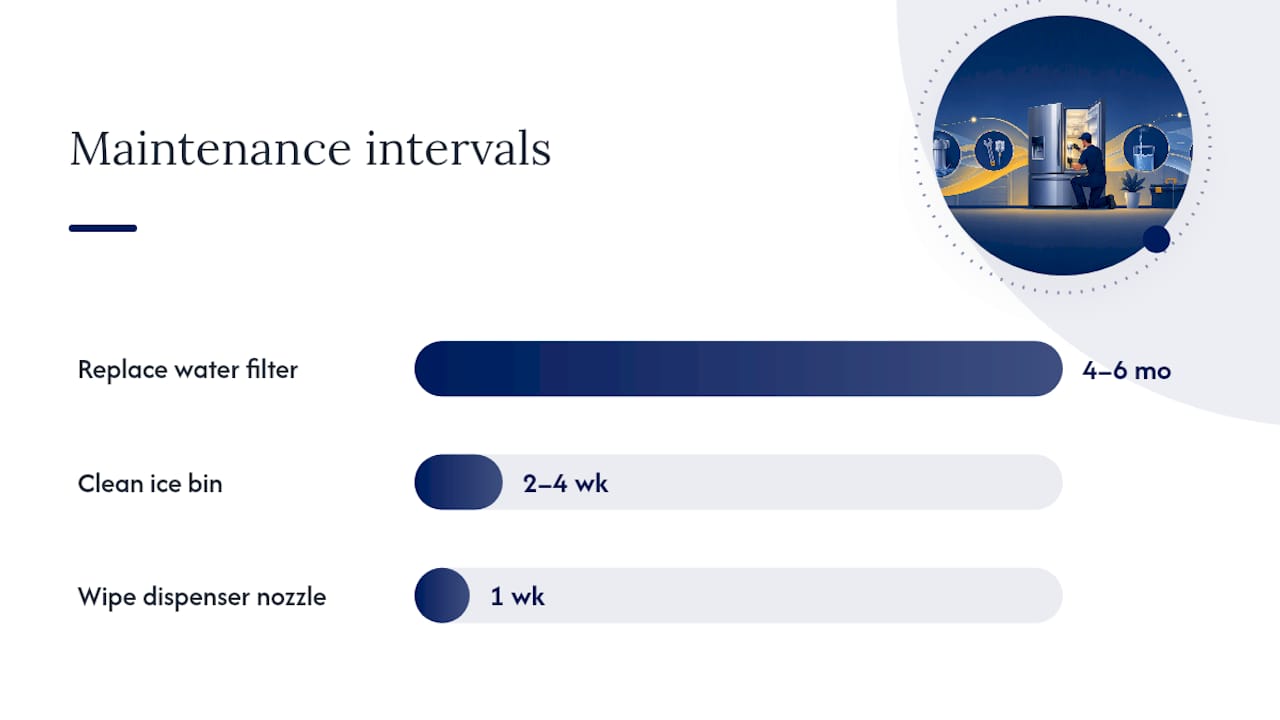
Between filter changes, a few small habits keep bad tastes from creeping back in. Empty and rinse the ice bin every two to four weeks, even if nothing seems wrong with it. Wipe down the dispenser nozzle weekly with a damp cloth, since that’s where mineral scale and moisture tend to build unnoticed.
Watch for early warning signs rather than waiting for the taste to get bad again:
- Noticeably weaker dispenser flow or pressure
- Slow ice production or ice cubes that come out smaller than usual
- Cloudy or oddly shaped ice cubes
- Visible debris or discoloration in the water stream
Keep a simple record of your filter’s part number and purchase date. It sounds minor, but it saves real time later, especially if you’re troubleshooting under warranty or trying to remember which cartridge fits your model.
| Maintenance task | How often | Why it matters |
|---|---|---|
| Replace water filter | Every 6 months (or 4 months with heavy use/well water) | Restores taste-filtering capacity and dispenser flow |
| Clean ice bin | Every 2 to 4 weeks | Prevents odor transfer and buildup |
| Wipe dispenser nozzle | Weekly | Limits mineral scale and mildew |
| Flush lines after idle periods | After any extended non-use | Clears stagnant water and trapped air |
A refrigerator maintenance plan can take the guesswork out of timing these tasks if you’d rather not track it yourself.
What Repair Visits Actually Look Like
Rich has spent nearly 20 years fixing appliances in people’s homes across Southern New Hampshire, and bad-tasting water calls follow a pattern most homeowners don’t expect. The fix is rarely exotic.
The water almost never turns out to be “bad” in some mysterious way. It’s usually a filter nobody remembered to change, a plastic line that should have been PEX from the start, or an ice bin that hasn’t been washed since the fridge was installed. Once you know what to check, most of these calls take less than an hour.
On a typical visit, a technician checks the filter housing, inspects supply tubing for the wrong material, cleans or replaces the dispenser nozzle, and sanitizes the ice bin if odor transfer looks like the cause. You’ll get a diagnostic walkthrough and a clear estimate before any work starts, and every repair carries a one-year warranty on parts and labor.
Why Manufacturer Advice Only Gets You Halfway There
The troubleshooting steps from LG, Whirlpool, and KitchenAid are consistent for a reason. They all point to the same short list of causes because those causes account for the overwhelming majority of complaints. That consensus is genuinely useful, and it’s why this article leans on it heavily.
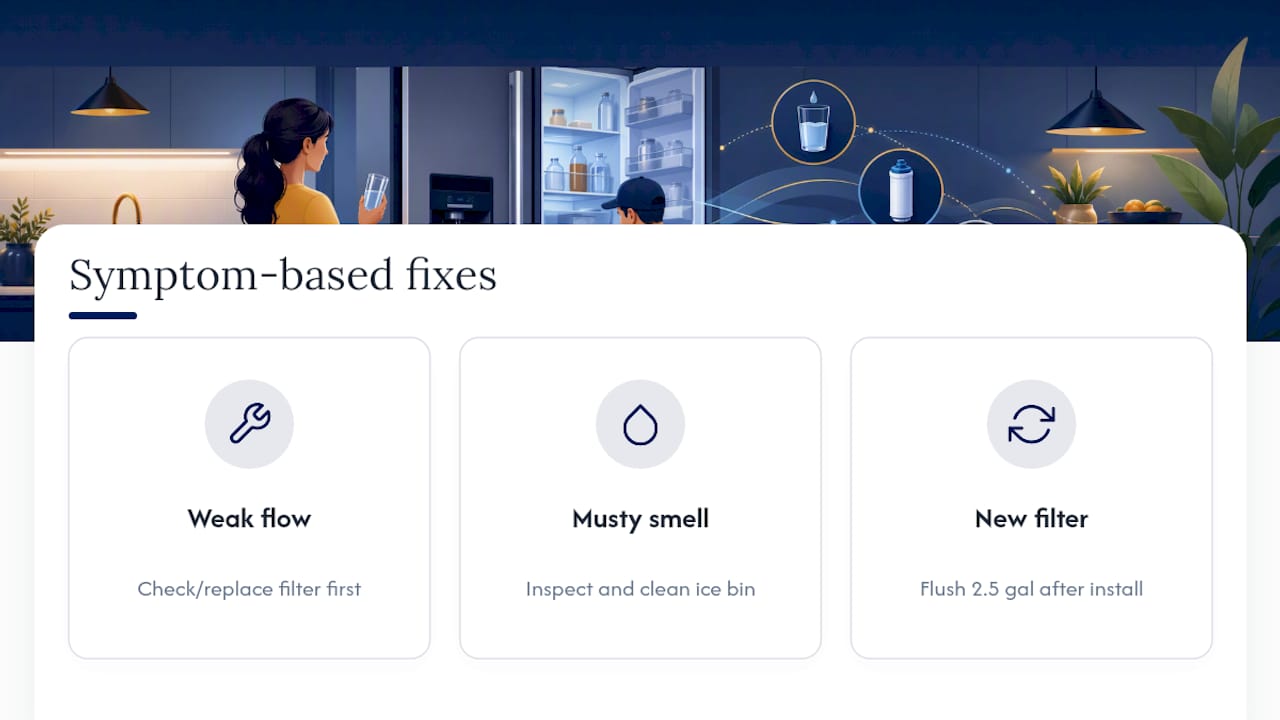
Where manufacturer guidance falls short is sequencing. A support page will tell you to check the filter, flush the lines, and inspect your tubing, but it won’t tell you which one to check first based on what you’re actually experiencing. That’s the gap between reading a troubleshooting page and knowing, from having done this hundreds of times, that weak dispenser flow plus bad taste points to a clogged filter almost every time, while a musty smell with no flow change points straight at the ice bin.
The other thing generic advice underestimates is how often people under-flush. A “quick rinse” after a filter change isn’t 2.5 gallons, and that shortcut is why so many homeowners think a new filter failed when it just never got a real flush. Start with the sink comparison, commit to the full flush volume, and only escalate to tubing or professional diagnosis if the taste survives both.
— Rich
Get Professional Help When DIY Fixes Don’t Work
If you’ve replaced the filter, flushed the lines, cleaned the ice bin, and the water still tastes off, or you suspect the supply tubing itself needs replacing, it’s time to bring in a technician instead of guessing further. Persistent taste after these steps often points to a plumbing-side issue or a component problem that isn’t a quick swap.
Unlike a full appliance replacement or an open-ended service call, some repair services offer in-home diagnostics, transparent pricing before any work begins, and warranties on parts and labor. Technicians commonly handle tubing replacement, filter re-seating, dispenser and nozzle cleaning, and ice-bin sanitation in a single visit. Before you schedule refrigerator repair, have your fridge’s model number, a description of when the taste started, and your filter’s part number ready. It shortens the visit and helps the technician arrive with the right parts already in hand.
Manufacturer and Public Health Resources Worth Checking
- LG’s official guidance on ice and water taste covers flush volumes and new-filter symptoms in detail.
- Whirlpool’s troubleshooting page explains tubing material issues and softener effects on ice makers.
- KitchenAid’s support guidance confirms the same sequence: check tap water, flush lines, replace the filter, inspect tubing.
- The EPA’s nuisance chemical guidance and CDC’s drinking water advisory overview offer background if your sink water itself tastes off.
Sources
- LG Refrigerator – Why Does the Ice or Water Taste Bad? | LG USA Support
- Correcting Odd Tasting Water or Ice – Product Help | Whirlpool
- Water has Odor or Off Taste – Refrigerator – Product Help | KitchenAid
FAQ
How do I fix bad-tasting fridge water?
Replace the water filter, flush 2.5 to 3 gallons through the lines, and clean the ice bin. If the taste matches your kitchen sink water, the fix is on the supply side, not the appliance.
Why does my refrigerator water taste funny after replacing the filter?
New filters often release trapped air and loose carbon dust that create a temporary chalky or plastic taste. Flushing the recommended 2.5 to 3 gallons clears this within the first few uses.
Why does my refrigerator water taste like chemicals?
A chemical taste after a filter change is usually normal carbon dust residue that flushing removes. If it persists beyond that, check whether your supply tubing is nylon, braided plastic, or new copper, since those materials can leach a similar taste.
My new LG refrigerator water tastes like plastic. What’s causing this?
New units and freshly installed water lines carry residual manufacturing taste that hasn’t been flushed out yet. Run several full dispensing cycles, discarding the water each time, and the taste should clear within the first day or two of use.
When should I call a technician instead of troubleshooting myself?
Call a technician if bad taste persists after a filter change, full flush, and ice bin cleaning, or if you notice unusual odors suggesting contamination. Anothercycleappliance handles tubing replacement and dispenser repairs with a one-year warranty on parts and labor.