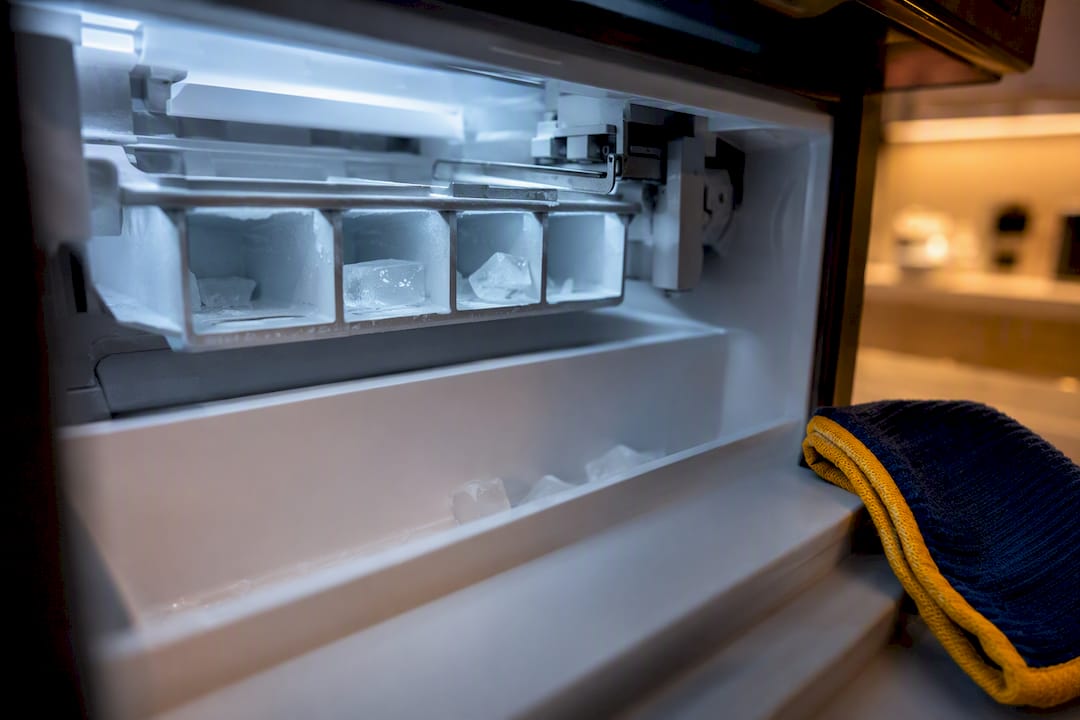
Most slow ice production comes down to three things: freezer temperature, water filter condition, and flow to the fill valve. Check the freezer setting, swap the filter if it’s been six months or longer, and inspect the supply line for kinks. Then give the machine 24 hours to recover before assuming something’s broken. In the vast majority of cases, that’s all it takes.
TL;DR:
- The freezer temperature should be maintained around 0°F to ensure efficient ice production, with a recovery time of up to 24 hours after adjustments.
- Replacing a water filter every six months and flushing the line can significantly improve water flow into the ice maker, reducing slow production.
- Kinks, pinches, or low water pressure in the supply line are common causes of slow ice and should be inspected when troubleshooting.
- Deep issues, such as failing inlet valves or partially frozen fill tubes, often require professional diagnosis and repairs.
- Routine maintenance like cleaning the ice bin and ensuring proper placement of the refrigerator can prevent slow ice production over time.
Table of Contents
- Why Is My Ice Maker Slow? Common Causes Explained
- Step-By-Step Quick Fixes to Try Right Now
- Deeper Water-Flow and Parts Checks
- Temperature, Placement, and Freezer Load Fixes
- When to Call a Professional for Ice Maker Repair
- Prevention: A Routine Maintenance Checklist
- What Our Technicians See Most Often
- Skip the Guesswork With In-Home Ice Maker Repair
- Sources
Why Is My Ice Maker Slow? Common Causes Explained
An ice maker slow to keep up with demand almost always traces back to one of a handful of predictable culprits. Understanding them helps you skip the guesswork.
Freezer temperature tops the list. Ice makers need cold, stable air to cycle efficiently, and a freezer running even a few degrees too warm will visibly slow output. A clogged or expired water filter is a close second. It restricts flow into the mold, producing small, hollow cubes or none at all, and manufacturers generally recommend replacing the water filter about every six months to keep flow steady.
Beyond the filter, a kinked or pinched supply line, low household water pressure, or a partially frozen fill tube can each choke off water before it reaches the tray. A failing inlet valve produces similar symptoms. And sometimes there’s no mechanical problem at all: after a party or a heavy week of use, the unit just needs time to catch up.
Root causes worth ruling out:
- Freezer temperature above the ideal range for ice production
- Expired or clogged water filter restricting flow
- Kinked, pinched, or low-pressure water supply line
- Partially frozen fill tube or failing inlet valve
- Recent heavy ice usage still in recovery
- Low freezer food load affecting temperature stability
Step-By-Step Quick Fixes to Try Right Now
Before you assume the worst, work through these checks in order. Most homeowners solve slow ice production without ever calling a technician.
- Confirm the ice maker is actually on, then check for a test mode. Many refrigerators, including models documented by LG, let you run a quick diagnostic cycle that shows whether the motor turns and whether water fills the tray. It takes about two minutes and tells you a lot.
- Set the freezer to around 0°F. Grab a separate appliance thermometer if you don’t trust the digital display. Then wait. Give it a full 24 hours before checking progress.
- Replace the water filter and flush the line. Run a few cups of water through the dispenser after installing a new filter to clear out air pockets, then let the ice maker run several cycles.
- Straighten out the water supply line. Pull the fridge out (carefully, over a towel) and look for any sharp bends behind or beneath it. Check that dispensed water flows at a normal, steady rate.
- Feel along the fill tube for ice buildup. A partially frozen tube or a valve that hums without producing water usually points to bigger issues than a filter.
Pro Tip: Keep a small notebook or phone note of what you changed and when. If ice production doesn’t improve within 24 hours of a fix, that log makes it much easier for a technician to zero in on the problem later.
Deeper Water-Flow and Parts Checks
If the basics don’t move the needle, the problem is likely further down the water line. A clogged filter typically produces small, hollow, or oddly shaped cubes, and while replacing it restores flow, it can take several cycles before output looks normal again.
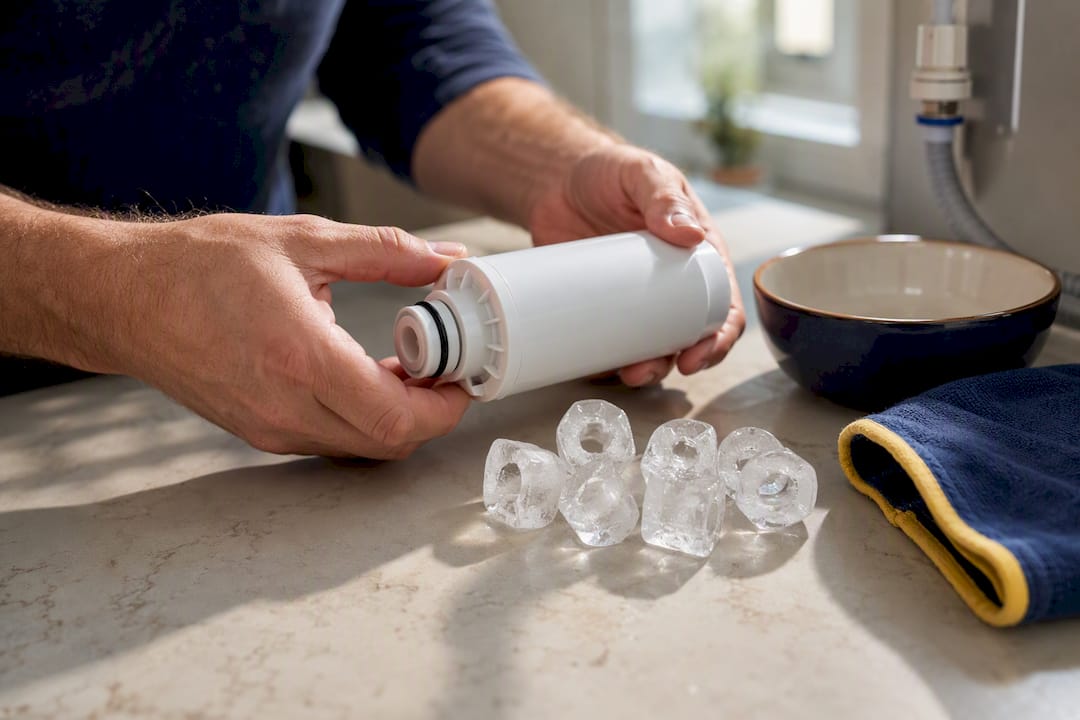
Older installations sometimes rely on self-piercing saddle valves, tapped directly into a copper pipe. These restrict flow by design, and replacing a pierce-style valve with a proper drilled service valve usually fixes chronic under-fill problems for good.
Watch for these warning signs:
- Small, hollow, or misshapen cubes despite a fresh filter
- A humming inlet valve that produces little or no water
- Visible ice or frost buildup on the fill tube
- Water dispenses slowly at the door but the ice maker still lags behind
A partially frozen fill tube often points to repeated brief temperature swings in the freezer or an inlet valve on its way out, and pinpointing which one usually calls for a technician’s pressure and continuity tests.
Temperature, Placement, and Freezer Load Fixes
Environment matters more than most homeowners realize. OEM guidance commonly targets 0°F for reliable ice production, with many manufacturers setting an upper limit around 5°F, and it takes about 24 hours for the ice maker to fully recover after any temperature adjustment.
A few habits make a real difference:
- Keep the rear vents clear of frozen bags and boxes that block airflow
- Avoid long or frequent door openings that let warm air spill in
- If the freezer is less than half full, add a few gallon jugs of water as thermal mass to stabilize the temperature
- Use a “Quick Freeze” or “Max Ice” feature sparingly. It gives short-term production a boost but isn’t a fix for an underlying flow problem
When to Call a Professional for Ice Maker Repair
DIY fixes solve most cases, but a few signs mean it’s time to stop troubleshooting and call in help.
- No improvement at all after 24 to 48 hours of trying the steps above
- Unusual motor noise, buzzing, or a valve that never clicks on
- Water pressure that stays low even after checking the line and filter
- Ice that stops completely rather than just slowing down
A technician will typically test the inlet valve’s continuity, check actual water pressure at the line, and inspect the fill tube and motor assembly before replacing parts. Working with a company that offers documented warranties on parts and labor and transparent pricing upfront means you’re not gambling on a guess.
Prevention: A Routine Maintenance Checklist
A little routine maintenance keeps slow ice production from becoming a repeat problem.
- Replace the water filter every six months, then flush the line with a few cups of water afterward.
- Keep the freezer at its recommended temperature and limit unnecessary door openings that let cold air escape.
- Inspect the supply line whenever you move or reposition the fridge. Tight bends behind the unit are one of the most overlooked causes of slow flow.
- Do an annual deep clean of the ice bin and dispenser chute per your model’s manual, and jot down the date so you can track patterns over time.
Pro Tip: After any fix, allow several full ice cycles, often close to 24 hours, before judging results. Cube size and bin volume both take time to normalize.
What Our Technicians See Most Often
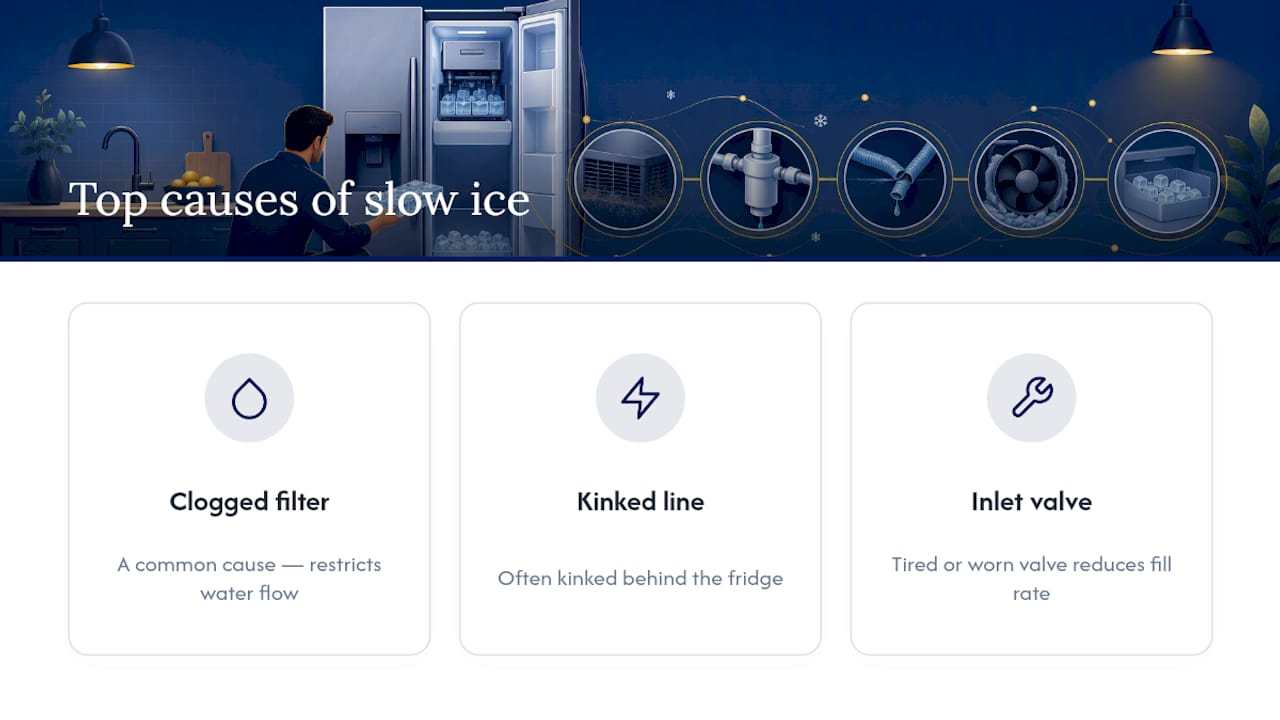
Nearly 20 years of service calls across Southern New Hampshire have taught Rich and the Anothercycleappliance team a simple lesson: the fix is rarely dramatic. A clogged filter, a kinked line behind the fridge, or a tired inlet valve accounts for most slow-ice calls. For homeowners who’d rather skip the troubleshooting, our refrigerator repair and service pages outline warranty coverage and what to expect from a visit.
Skip the Guesswork With In-Home Ice Maker Repair
Anothercycleappliance gets your ice maker back to full speed in one visit, with a technician who diagnoses the actual cause instead of swapping parts and hoping. That’s the real difference between a DIY afternoon and a fixed appliance: our team tests the inlet valve, water pressure, and fill tube on the spot, backed by a one-year warranty on parts and labor.
If you’ve worked through the filter, temperature, and line checks above and ice production still lags, it’s probably a part, not a habit. We serve homeowners throughout our coverage area in Southern New Hampshire with clear, upfront pricing and no surprise fees. You can request service now or browse our full list of appliance repair services to see what’s covered before you book.
Sources
For model-specific specs, these sources are worth bookmarking:
- What should I do if my ice maker is not making enough ice in my refrigerator? | Frigidaire
- Refrigerator – Slow Ice Production – GE Kitchen Appliances
- Sub-Zero Slow Ice Production | How to Guides | Quick Answers
- LG Refrigerator – Why is My Refrigerator Not Making Ice? | LG USA Support