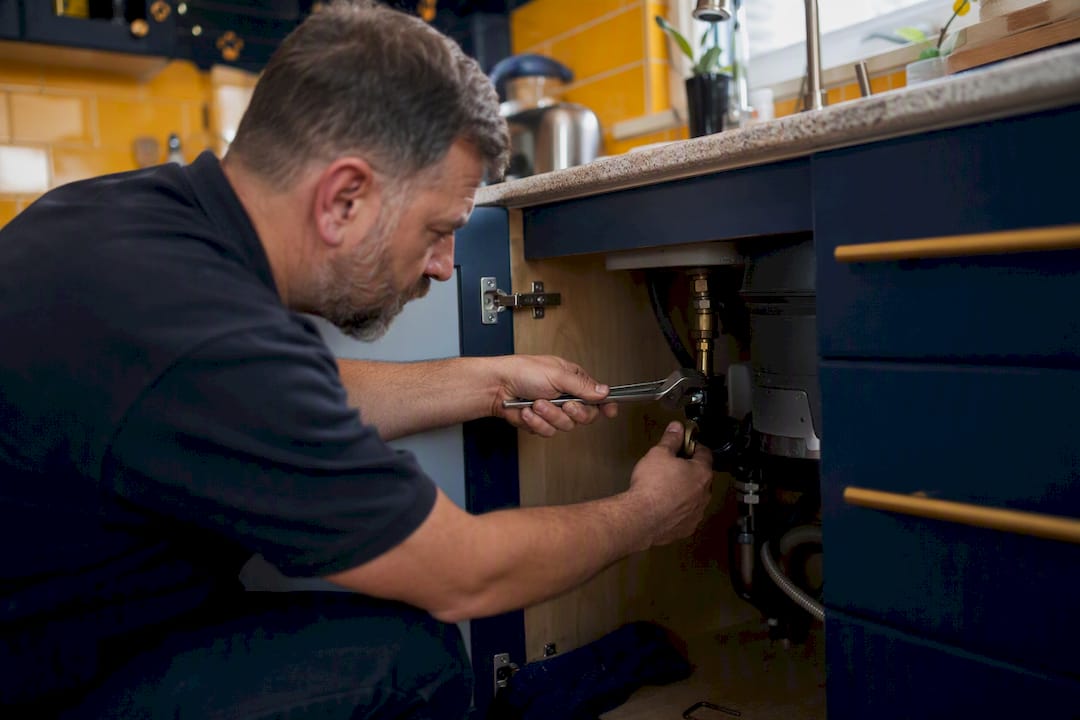
Garbage disposal repair costs typically fall within a moderate range, averaging in the lower hundreds, while a full replacement with professional installation usually costs several hundred dollars. The rule of thumb: repair a unit when it is relatively new and the fix costs less than half the price of a new one, and replace anything older or pricier to fix. Most jobs also carry a service call fee plus parts, which explains why two “simple” repairs can land at very different prices.
TL;DR:
- Repair costs for garbage disposals typically range from $100 to $250 for common issues, with motor replacements at the higher end of $200 to $450.
- Fixing a unit under 7 years old typically makes sense if the repair costs less than half the price of a new disposal, especially for simple problems like jams or leaks.
- Parts prices vary: gaskets cost $3 to $20, grinding plates $15 to $55, and replacement motors $70 to $200, affecting repair costs significantly.
- Additional factors influencing price include unit age, accessibility, electrical and plumbing complexity, and local labor rates.
- DIY repairs are safe for resetting or clearing jams but costly and risky without expertise for electrical or internal mechanical issues.
Table of Contents
- How Much Is Garbage Disposal Repair Cost, Really?
- What Drives the Price by Repair Type
- What Affects the Price on Your Estimate
- Repair or Replace? The Numbers Make the Call
- DIY or Call a Pro? Here’s the Real Cost Comparison
- What Twenty Years of Service Calls Teaches You
- Book a Straightforward Repair with Another Cycle
- Where These Numbers Come From
- Sources
How Much Is Garbage Disposal Repair Cost, Really?
The range depends entirely on what broke. A jammed unit or tripped reset switch might cost you nothing beyond a service call, while a burned-out motor pushes toward full replacement territory. Modernize reports that typical repairs run $100 to $450, with most homeowners paying between $150 and $250 for common fixes. Angi’s data puts the average closer to $230, with parts like gaskets costing next to nothing and motor work sitting at the top of the range.
Here’s what a quote at each tier usually includes:
- Low end ($0–$150): Reset button trips or jam clearing, often just a service call fee if the technician is already booked for something else.
- Mid range ($75–$250): Leak repairs, seal or gasket replacement, or reconnecting a dishwasher line.
- High end ($200–$450): Motor replacement or grinding plate repair, where parts alone can run $70 to $200.
- Replacement ($200–$625): A new unit plus installation, disposal of the old one, and labor. NerdWallet puts the average near $550, mostly driven by unit horsepower.
A jam cleared with an Allen wrench takes ten minutes and might cost you a flat service fee. A motor swap can eat an hour of labor plus a $70 to $200 part, which is why that repair sometimes edges close to replacement pricing.
What Drives the Price by Repair Type
Breaking costs down by the actual problem makes it easier to spot a fair quote from an inflated one.
| Repair type | Typical cost range | Notes |
|---|---|---|
| Reset (tripped switch) | $0–$150 | Often covered by the base service call |
| Jam removal | $50–$150 | Quick fix, minimal parts |
| Leak or seal repair | $75–$250 | Depends on whether the flange or gasket needs replacing |
| Dishwasher line reconnection | $75–$200 | More labor if the connection was rerouted or damaged |
| Motor replacement | $200–$450 | Parts alone run $70–$200; labor adds the rest |
Parts pricing tells its own story. A gasket typically costs $3 to $20. A sink flange runs $8 to $18. Grinding plates land between $15 and $55. A replacement motor is the biggest single part, at $70 to $200, and a power cord adds another $10 to $30 if it’s frayed or damaged.
Time on-site matters as much as parts. A jam clearing or reset usually takes a technician 15 to 30 minutes. A motor swap or leak repair involving the mounting assembly can stretch past an hour, and labor is billed by time, not by the part itself. That’s the real reason two repairs with similar parts costs can land on opposite ends of your final bill.
What Affects the Price on Your Estimate
Seven variables explain most of the swing between a $100 repair and a $450 one.
- Unit age and horsepower. Older units and higher horsepower models cost more to source parts for, and 3/4 HP or 1 HP units run pricier than a standard 1/3 HP disposal.
- Accessibility. A unit tucked behind a garbage can system or requiring cabinet removal adds labor time.
- Electrical complications. Adding an outlet, replacing worn wiring, or wiring a dedicated circuit adds real cost beyond a simple swap.
- Plumbing complexity. Dishwasher connections or drain lines that need rerouting extend the job.
- Material and feed type. Stainless steel components and continuous-feed models generally cost more than aluminum, batch-feed units.
- Local labor rates. Hourly rates and minimum service charges vary by market and time of year.
- Warranty, disposal, and permit fees. Hauling away the old unit or pulling a permit for electrical work can tack on extra charges.
Pro Tip: Ask upfront whether the diagnostic fee gets applied toward the repair if you approve the work. Most reputable companies apply it, but it’s not universal, and it’s the easiest way to avoid a surprise on the final invoice.
Repair or Replace? The Numbers Make the Call
Age and cost percentage settle this decision faster than gut instinct. Industry guidance suggests repairing units under roughly 7 years old when the fix costs under 50 to 60% of a full replacement, and replacing anything older or pricier to fix.
A $150 repair on the same unit stays comfortably under the threshold and is worth doing.
Certain problems skip the math entirely and point straight to replacement:
- Leaks coming from the body of the unit itself, not a connection point
- Motor burnout on a unit already past 7 or 8 years old
- Repeated repair calls for the same or related problems within a year
- Visible corrosion on the housing or mounting assembly
Repairs that make sense on their own merits include a single jam, a worn seal, or a cracked gasket on a unit that’s otherwise running fine and under 7 years old.
DIY or Call a Pro? Here’s the Real Cost Comparison
Some fixes are genuinely safe to handle yourself. Hitting the reset button, clearing a jam with a hex key through the bottom port, or swapping a flange gasket (parts run $3 to $20) are all manageable weekend jobs.
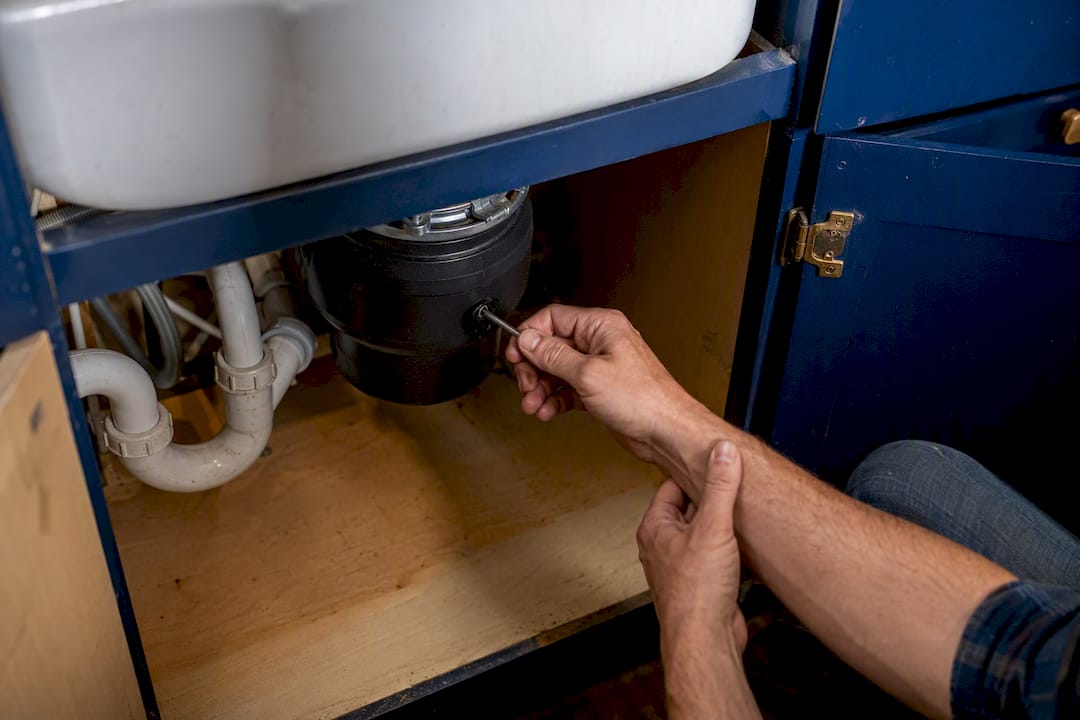
Motor rebuilds, electrical rewiring, and plumbing changes that involve rerouting drain lines are a different story. Professional technicians warn against DIY internal repairs because of the risk around live electrical components and the plumbing code issues that come with improper connections.
If you’re calling a pro, expect:
- A diagnostic or service call fee of roughly $50 to $100
- Hourly labor rates between $50 and $120, depending on your market
- A minimum charge even for quick fixes
To speed up the visit and keep costs down, clear the cabinet under your sink, confirm you know where the breaker is, and write down exactly what’s happening (grinding noise, no sound at all, water pooling) before the technician arrives.
What Twenty Years of Service Calls Teaches You
Rich, of Another Cycle Appliance Repair, has spent nearly two decades doing in-home appliance repair across Southern New Hampshire, and garbage disposals rarely fail the way homeowners expect. The surprises are usually mechanical, not electrical: a seized angle-stop shutoff valve that won’t turn, corroded mounting hardware from years of moisture, or a sink mount that doesn’t match the replacement unit. Three things speed up a visit: know where your water shutoff is and confirm it turns, clear the cabinet space beforehand, and have your disposal’s brand and model number ready if you know it.
— Rich
Book a Straightforward Repair with Another Cycle
Another Cycle Appliance Repair is the direct alternative to guessing at a repair yourself or gambling on an unfamiliar contractor. Every job comes with a one-year warranty on parts and labor, transparent pricing that applies the diagnostic fee toward your repair once you approve the work, and same-day options when your schedule calls for it.

Southern New Hampshire homeowners have made Another Cycle a 5-star rated choice for garbage disposal repair because the pricing is clear from the first phone call, not the final invoice. Whether it’s a stuck reset switch or a motor that’s finally given out, you’ll know your options before any work begins. Request service now or schedule online to get a technician out to your home.
Where These Numbers Come From

The cost ranges above come from Angi, Modernize, NerdWallet, and ConsumerAffairs. Local quotes vary by market, so an in-person estimate is still the most reliable way to know your exact number.
Sources
- How Much Does Garbage Disposal Repair Cost? 2025 Data — Angi
- Garbage Disposal Repair Cost: What to Expect In 2026 — Modernize
- How much does it cost to replace a garbage disposal? — NerdWallet
- Garbage Disposal: Repair vs. Replacement — AlertPlumber