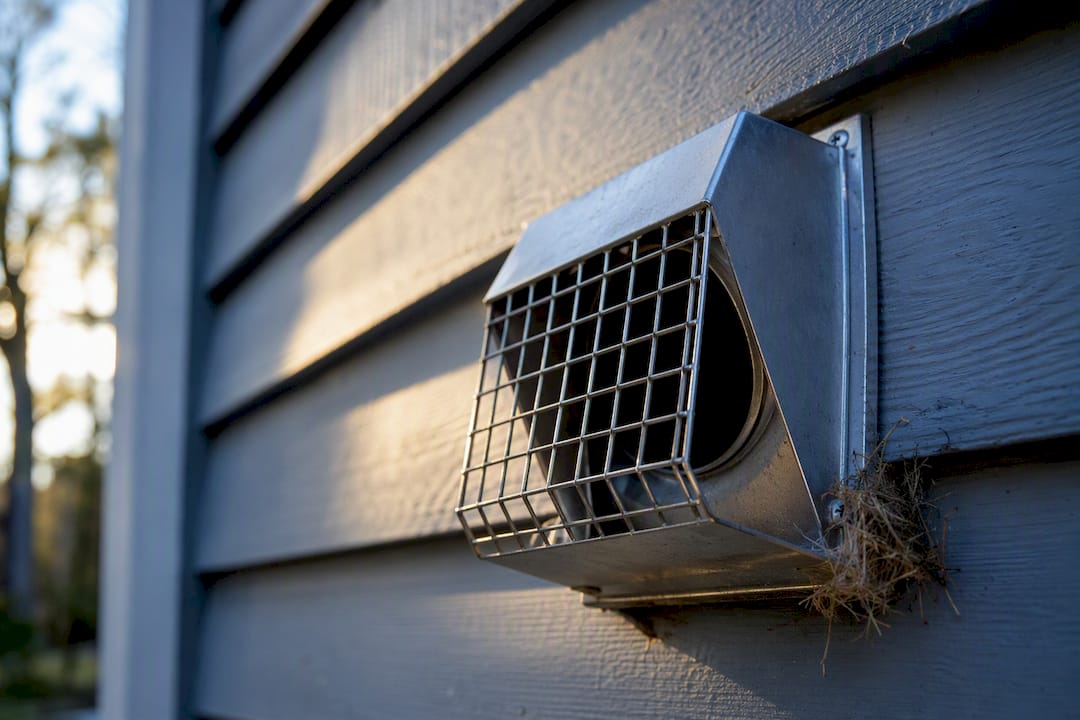
The best dryer vent bird guard is a metal pest-guard cage or a magnetic, self-closing flap cap with an internal guard, not a decorative cover or a fine mesh screen. Every termination needs a backdraft damper and non-combustible materials, since lint buildup behind blocked vents is a real fire risk. If you already suspect a clogged or nested vent, stop running the dryer until it’s cleared.
TL;DR:
- Metal pest-guard cages and magnetic self-closing flap caps with internal barriers are the most reliable options for preventing bird entry and ensuring airflow.
- Installing a backdraft damper and using non-combustible materials is mandatory, as lint buildup behind blocked vents poses a serious fire risk.
- Regular inspections twice a year, especially before nesting season, help catch loose fasteners, debris, or damage early and prevent costly repairs.
- Fine mesh screens under 1/4 inch are discouraged because they trap lint, increasing fire hazards, whereas metal or magnetic guards are recommended.
- Professional installation and maintenance, including periodic cleaning and nest removal, are highly recommended to ensure safety and prevent recurring wildlife problems.
Table of Contents
- What Types of Dryer Vent Guards Actually Work?
- What Building Codes Require for Vent Guards
- How to Pick the Right Guard for Your Vent
- How Do I Install a Bird Guard on My Dryer Vent?
- How Often Should You Inspect a Dryer Vent for Birds?
- What to Do If You Find a Bird in Your Dryer Vent
- Field Notes From Another Cycle Appliance Repair
- Why Prevention Beats Cleanup Every Time
- Get Your Vent Guard Installed Right the First Time
- Sources
- FAQ
What Types of Dryer Vent Guards Actually Work?
Not every cap sold for dryer vents belongs there, and the wrong pick can trade one problem (birds) for a worse one (fire). Here’s how the main styles stack up.
Metal cage or pest-guard caps use a rigid wire or bar structure around the vent opening. Birds and squirrels can’t squeeze through, air still moves freely, and galvanized or stainless versions hold up through New Hampshire winters without rusting out. These are the workhorses homeowners with a recurring bird problem should reach for first.
Magnetic or heavy self-closing flap caps with an internal guard pair a traditional hinged flap with a second barrier behind it, usually a small grid or bar set. The flap still opens under dryer exhaust pressure, but a determined starling can’t force it open from outside and build a nest behind it. Inspectapedia’s installation guidance specifically recommends a secure, self-closing screened termination at the exterior wall for exactly this reason.
Vertical-bar exclusion covers are the more industrial option. Products like the HY-GUARD EXCLUSION line space steel bars widely enough to meet code while still blocking animal entry, and many include a hinged front panel so you can pop it open for cleaning instead of unscrewing the whole unit. A 6-inch model typically covers vents up to 4 inches; an 8-inch model fits up to 6-inch ducts.
Multi-flap and louvered caps work fine in low-pest areas with light airflow needs, but a bird with patience can sometimes wedge a flap open, especially if the spring weakens over a season or two. Treat these as adequate, not ideal, if you’ve had nesting problems before.
Avoid these outright:
- Fine-mesh or window-screen-style covers under 1/4 inch of opening
- Plastic decorative caps sold mainly for appearance
- Any cover with no moving flap or damper at all
Fine mesh keeps birds out, but it also catches lint, and that buildup is one of the more overlooked fire triggers behind exterior walls.
What Building Codes Require for Vent Guards
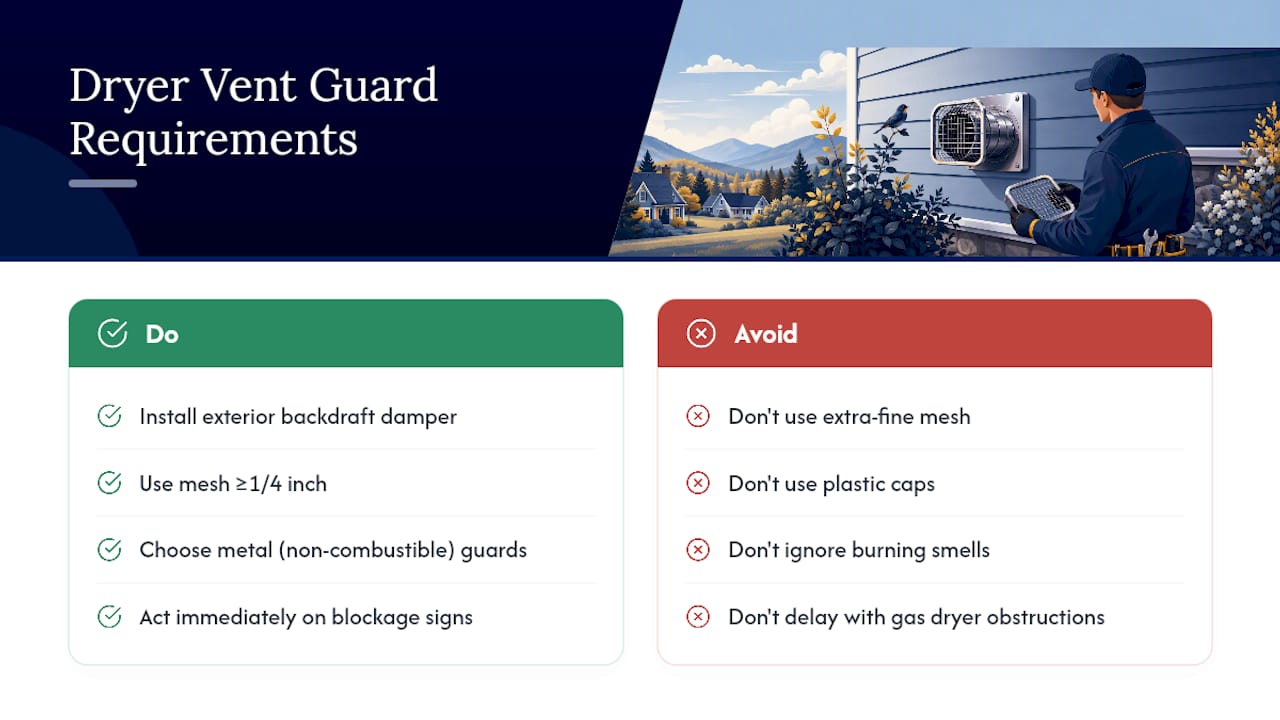
A backdraft damper isn’t optional. Every dryer vent termination needs one so exhaust air can push out freely while outside air and animals are kept from pushing back in. Codes referenced in the International Residential Code framework call for this damper at the exterior end of every dryer exhaust run.
Mesh size matters just as much as the damper. Screens smaller than 1/4 inch are discouraged specifically for dryer vents, unlike other vent types where fine mesh is common. Lint is fibrous and sticky, and it clings to tight mesh almost immediately.
Pro Tip: If a guard you’re considering advertises “extra fine mesh for maximum protection,” that’s a marketing feature working against you on a dryer vent. Fine mesh belongs on bathroom fan vents, not dryer exhaust.
Material choice is the third code consideration. Non-combustible materials, meaning metal rather than plastic, are the standard recommendation for dryer exhaust terminations. Plastic caps soften and warp near hot exhaust air over time, and a warped cap seals poorly, which lets both lint and pests through the gaps.
Why this matters: A clogged dryer vent is a documented fire and carbon monoxide hazard, and nest material trapped in a vent run is one of the more common triggers technicians find during inspections. If you notice a burning smell, unusually long dry times, or a dryer that runs hot to the touch, treat it as an active blockage risk, not a minor inconvenience.
Gas dryers add a carbon monoxide layer to this risk. A blocked vent on a gas unit can push combustion byproducts back into the house instead of outside, so any suspected obstruction on a gas dryer setup deserves faster action than an electric one.
How to Pick the Right Guard for Your Vent
Start with a tape measure, not a shopping cart. Most residential dryer vents run either 4 inches in diameter, which is standard, or occasionally 6 inches on longer runs or commercial-style setups. Buying a guard sized for the wrong diameter is the single most common return reason at hardware stores.
Wall-mounted terminations and roof exits need different guard styles. A wall vent sits at a height birds can reach easily from a nearby tree or gutter line, while a roof vent is more exposed to weather but less accessible to nesting birds looking for a sheltered ledge. If your vent exits onto a roof, prioritize weatherproofing and secure fastening over pest exclusion alone.
Match the guard to what’s actually bothering you:
- Starlings and house sparrows are aggressive nest builders that will force weak flaps open repeatedly; go with a metal cage or vertical-bar exclusion cover.
- Wrens are smaller and more persistent about finding tiny gaps, so seal-quality matters more than bar spacing.
- Squirrels and chipmunks need a genuinely rigid barrier, since a flimsy flap or thin aluminum won’t survive repeated gnawing.
On materials, galvanized steel and powder-coated steel both outlast bare aluminum or plastic, especially in coastal or humid parts of New England where corrosion sets in faster. Expect to pay more upfront for steel, roughly double a basic plastic flap cap, but you’ll likely get five to ten years of service instead of replacing a warped plastic cap every season or two.
If you’ve dealt with repeat nesting, pay attention to access. A hinged front panel or removable cover turns a five-minute cleaning check into an actual five-minute task instead of a full uninstall. Homes near wooded lots or with bird feeders nearby should treat that hinged design as a near-requirement rather than a nice extra.
How Do I Install a Bird Guard on My Dryer Vent?
Installing a new guard is a manageable weekend task for most homeowners, as long as the vent is currently clear and undamaged.
- Prep and safety first. Unplug or de-power the dryer, let the vent area cool if it’s been running, and put on work gloves and a dust mask. Confirm there’s no active nest with eggs or chicks before you touch anything.
- Remove the old cap. Unscrew the existing termination and set it aside; check the mounting collar for cracks or rust while it’s exposed.
- Inspect the damper. Make sure it swings freely and isn’t bent, rusted shut, or missing altogether.
- Clear debris. Vacuum or brush out any loose lint, leaves, or nesting material right at the opening before mounting anything new.
- Mount the new guard. Fasten it securely to the wall or roof collar using corrosion-resistant screws, and seal the collar edge if the manufacturer recommends it.
- Test with the dryer on low heat. Run a short cycle and confirm the flap or damper opens under airflow and the guard sits flush with no gaps.
Common mistakes worth avoiding: swapping in a fine-mesh screen because it “looks more secure,” crushing the flexible duct while forcing a new cap into place, and skipping the collar seal so wind-driven rain gets in around the edges.
Call a professional instead of finishing the DIY route if you find an active nest with eggs or chicks, signs of nesting deep inside the duct run rather than just at the opening, a crushed or torn flex duct, or if you have a gas dryer and any doubt about carbon monoxide safety. None of those situations are worth troubleshooting solo.
How Often Should You Inspect a Dryer Vent for Birds?
Twice a year is the minimum, and the timing matters. Peak nesting activity runs from March through August, with the heaviest pressure in April and May, so a pre-season inspection in February gives you a window to catch a weakening flap or loose fastener before birds start scouting nest sites. A second check in the fall catches anything that moved in over the summer before winter weather makes repairs harder.
During spring and summer, a quick monthly glance from the ground takes thirty seconds: look for twigs poking out of the cap, chirping sounds near the vent, or droppings on the siding below it.
Each full inspection should cover:
- Damper movement (does it swing freely, or is it stuck open or shut?)
- Visible nesting material, twigs, or feathers caught in the guard
- Fastener condition, since loose or rusted screws are how flaps start sagging
- Cracks, rust, or warping in the cap itself
Brush the exterior guard clean when you spot lint buildup on the outside, and plan on a full interior vent cleaning at least once a year, or immediately after removing any nest. Trimming back tree branches and shrubs near the vent opening removes convenient bird perches, and if you feed birds in the yard, consider moving feeders farther from the house exterior. A dedicated birdhouse elsewhere on the property can also pull nesting activity away from your siding entirely.
What to Do If You Find a Bird in Your Dryer Vent
Stop running the dryer immediately. A nest blocking the vent traps heat and lint together, and that combination is a fire hazard on top of the carbon monoxide risk on gas units. Resist the urge to push the nest deeper into the duct to clear the opening; that usually makes professional removal harder and can damage the flex duct.
Many native birds, including common species like wrens and swallows, are protected under the Migratory Bird Treaty Act, which makes it illegal to remove an active nest containing eggs or chicks without proper authorization. This isn’t a technicality to skip past. Call a wildlife removal specialist for active nests, and a dryer vent cleaning service for the vent-clearing, cleaning, and inspection work once the nest is safely gone.
- Wildlife removal handles live birds, eggs, or chicks and ensures the situation is handled legally and humanely.
- Vent cleaning professionals clear leftover debris, inspect the full duct run for damage, and confirm airflow is restored.
Full remediation typically costs somewhere in the $120 to $250 range depending on nest depth and duct condition, and that price generally covers nest removal, a complete brush cleaning of the duct run, and a check for peck holes or pinholes in the flex duct material. Skipping any one of those steps is how homeowners end up with a repeat nesting problem eighteen months later. Once the vent is clean and confirmed intact, install a proper metal or magnetic guard and put a follow-up cleaning on your calendar for next year.
Field Notes From Another Cycle Appliance Repair
Nearly 20 years of appliance work across Southern New Hampshire has taught the team at Another Cycle Appliance Repair one thing about vent guards: most failures aren’t the guard’s fault. They’re installation shortcuts. Loose fasteners work themselves free within a season, and crushed flex duct behind a poorly mounted cap restricts airflow long before anyone notices lint buildup.
The most common field fix is replacing a plastic flap cap that’s warped enough to leave a gap a house sparrow can squeeze through. If you’ve got a dryer running hotter than usual, taking longer to dry loads, or you’ve spotted debris at the vent opening, that’s worth a professional look before it becomes a bigger repair.
Why Prevention Beats Cleanup Every Time
Homeowners tend to treat a bird guard as a one-time purchase instead of an annual checkpoint, and that’s the gap that leads to repeat problems. A ten-minute inspection every February costs nothing and catches a failing flap before nesting season turns it into a $200 removal job. Choose metal or magnetic, skip anything with fine mesh, and if you’re not sure whether a duct is damaged behind that cap, get a professional opinion before you guess wrong.
— Rich
Get Your Vent Guard Installed Right the First Time
A hardware-store cap installed loosely, or on the wrong duct diameter, tends to fail within a season, which means paying for the same fix twice. Another Cycle Appliance Repair handles dryer vent cleaning and nest removal alongside proper guard installation in one visit, so you’re not scheduling two separate appointments for problems that usually go together. Every repair comes backed by a one-year warranty on parts and labor, with transparent pricing explained before any work starts.
If your dryer has been running hot, taking longer than usual, or you’ve already spotted nesting material at the vent opening, that’s worth a same-visit inspection rather than a guessing game. Homeowners who want ongoing coverage can also ask about the Platinum Appliance Care plan, which folds vent checks into a broader appliance maintenance schedule.
Serving homeowners and property managers across Southern New Hampshire, Another Cycle Appliance Repair is ready to book your vent cleaning and guard installation together. Schedule your service online to get started.
Sources
- Dryer Vent Outside Cover — Types, Replacement & Maintenance (2026) | LintSnap
- Birds in Your Dryer Vent? Here’s How to Remove Them Safely and Humanely | BobVila
- Clothes dryer vent installation — Inspectapedia
FAQ
How Do I Prevent Birds From Getting Into a Dryer Vent?
Install a metal cage guard or a magnetic self-closing flap cap with an internal barrier, since these block entry without trapping lint like fine mesh does. Pair that with a pre-nesting-season inspection every February to catch loose fasteners or gaps before birds start scouting for a spot.
How Do I Install a Bird Guard on My Dryer Vent?
Power down the dryer, remove the old cap, inspect the backdraft damper, clear any debris, and mount the new guard with corrosion-resistant screws before testing airflow on a low heat cycle. If you find an active nest with eggs or chicks, stop and call a wildlife removal professional instead of continuing the install.
What Should I Do If a Bird Is in My Dryer Vent?
Stop using the dryer right away, since a blocked vent creates both a fire risk and a carbon monoxide hazard on gas units. Many native birds are protected, so call a wildlife removal specialist for an active nest and a vent cleaning service for the follow-up clearing and inspection.
What Are the Best Bird Guards for Dryer Vents?
Metal pest-guard cages and magnetic or heavy self-closing flap caps with an internal barrier perform best against birds and small mammals while meeting code requirements. Vertical-bar exclusion covers like the HY-GUARD EXCLUSION line work well for recurring wildlife pressure and often include hinged fronts for easy cleaning.
Does Another Cycle Appliance Repair Install Dryer Vent Guards?
Yes, Another Cycle Appliance Repair installs code-compliant vent guards and handles dryer vent cleaning for homeowners across Southern New Hampshire, often in the same visit as nest removal. Current pricing for services and the Platinum Appliance Care plan is listed on the company’s site.