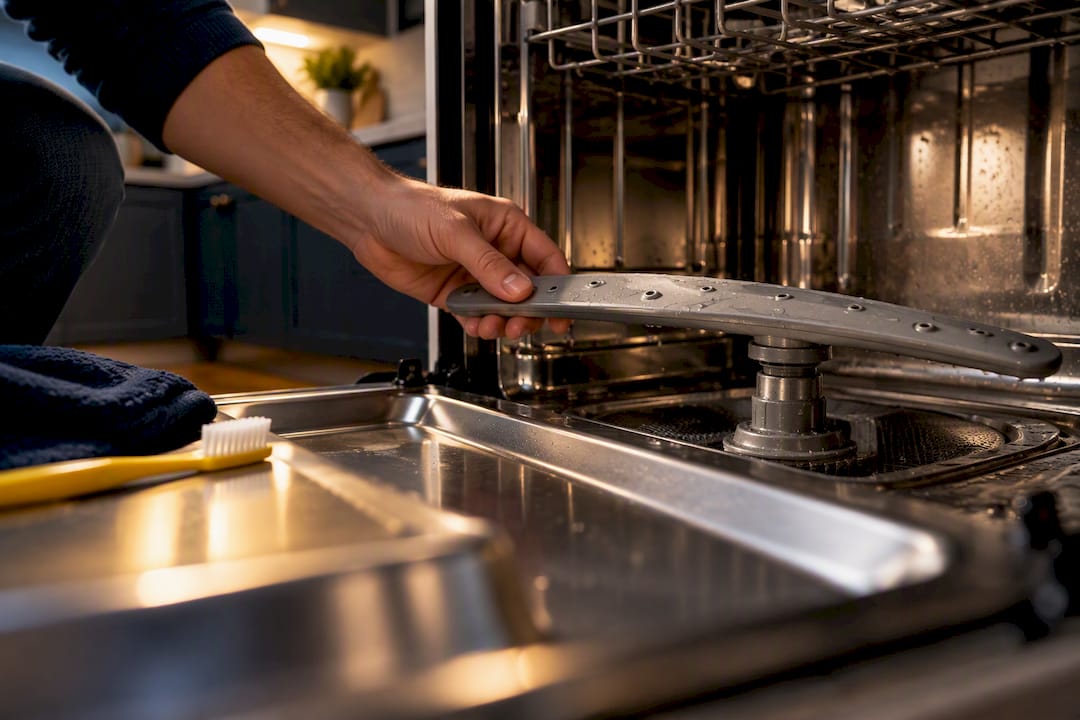
Most of the time, a dishwasher that isn’t cleaning is either recirculating dirty water because of a clogged filter or has spray arms that aren’t spinning freely. Start there: pull the filter, rinse it, and manually spin each spray arm to check for resistance. If a short hot-water cycle still leaves grit behind, the culprit is likely low water temperature, old detergent, or a full-on drain blockage. When none of that fixes it, you’re probably looking at a failing circulation pump or heating element, and that’s a job for a technician.
TL;DR:
- Regularly cleaning the filter every 2 to 4 weeks prevents recirculation of dirty water that causes dishes to appear gritty.
- Ensuring water enters at or above 120°F is critical for proper detergent dissolution and effective cleaning.
- Blocked spray arm holes or improper loading, like tall utensils blocking the detergent dispenser, often cause cleaning failures.
- Mechanical faults such as a failed circulation pump, heating element, or dispenser solenoid may require professional repair if basic maintenance doesn’t resolve the issue.
- In older machines over 10 years, weighing repair costs versus replacement is recommended once major parts like pumps or heating elements fail.
Table of Contents
- What To Check First When Your Dishwasher Won’t Clean Right
- Step-By-Step Dishwasher Troubleshooting That Actually Works
- When Basic Fixes Point to a Bigger Problem
- What Nearly 20 Years of Repair Calls Taught Us About Dirty Dishes
- Get Your Dishwasher Properly Diagnosed and Fixed
- Manufacturer Guidance Worth Bookmarking
- Sources
- FAQ
What To Check First When Your Dishwasher Won’t Clean Right
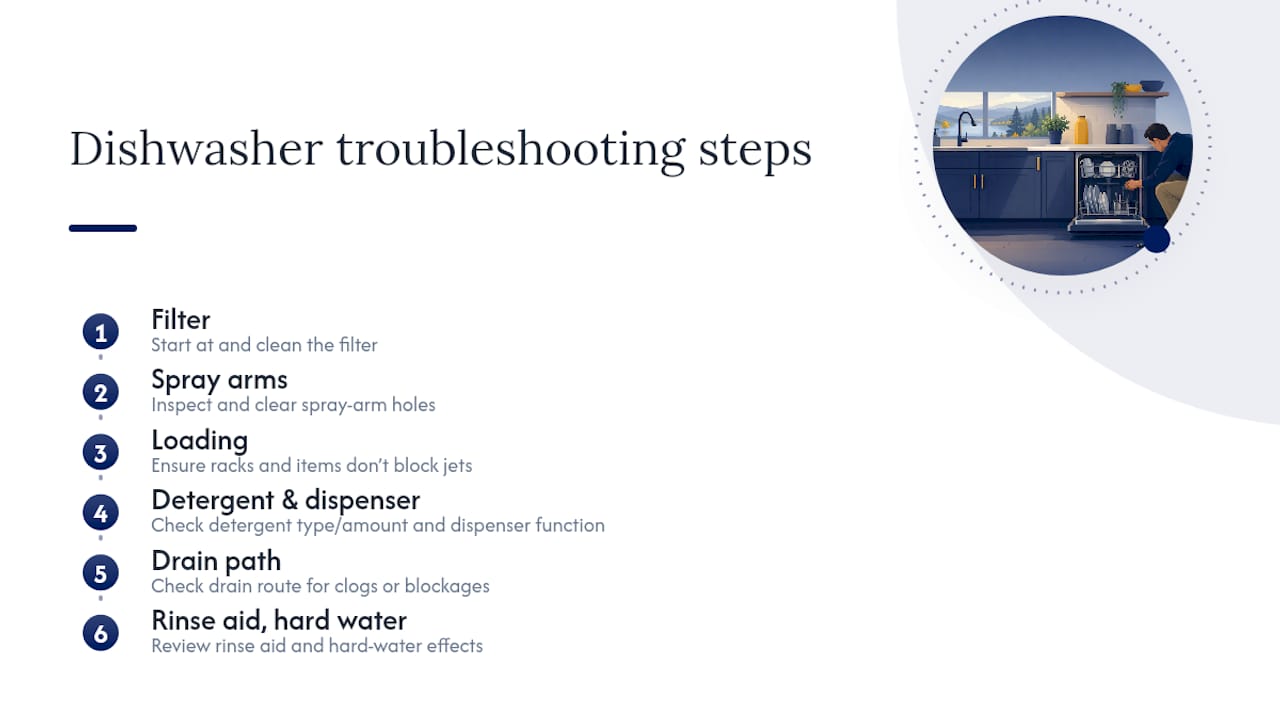
Before you take anything apart, run through this list in order. Each step takes a minute or two, and together they solve the majority of poor-cleaning complaints without a single tool beyond a toothpick.
- Turn on the hot water at the sink nearest your dishwasher for 30 seconds, then start a short cycle. This confirms the machine is filling with hot, not lukewarm, water.
- Pull the filter and clean it. Manufacturers like Whirlpool recommend cleaning the dishwasher filter every 2 to 4 weeks to keep food particles from recirculating.
- Spin the spray arms by hand. If they catch or drag, clear the holes with a toothpick.
- Check your detergent. Confirm you’re using the right type and amount, and watch that the dispenser lid actually pops open during the cycle.
- Check the rinse aid reservoir. An empty dispenser is a common, invisible cause of filmy glasses.
- Look for standing water in the tub bottom and clear the drain basket if it’s blocked.
- Run one hot maintenance cycle with a citric-acid cleaner or plain white vinegar, following your manufacturer’s guidance first.
Pro Tip: Keep a spare filter brush and a box of dishwasher-safe descaler under the sink. A five-minute filter clean every few weeks prevents most of the “why is my dishwasher not cleaning” calls we get.
Step-By-Step Dishwasher Troubleshooting That Actually Works
Working through the machine in order, from the filter outward, catches almost every common cause of dirty dishes. Here’s how to check each piece properly.
Start with the filter
Most dishwasher filters twist out with a quarter turn and lift straight up from the bottom of the tub. Look for grease film, food particles, or a coating of grit. Whirlpool’s own guidance calls for cleaning the filter every 2 to 4 weeks, and in hard-water or high-use households, that schedule is worth taking seriously rather than treating as an upper limit.
Rinse it under the tap and scrub with an old toothbrush if grease has hardened onto the mesh. Once it’s back in, run a loaded cycle and check the glasses and plate rims for grit. If they’re still cloudy, move to the spray arms.
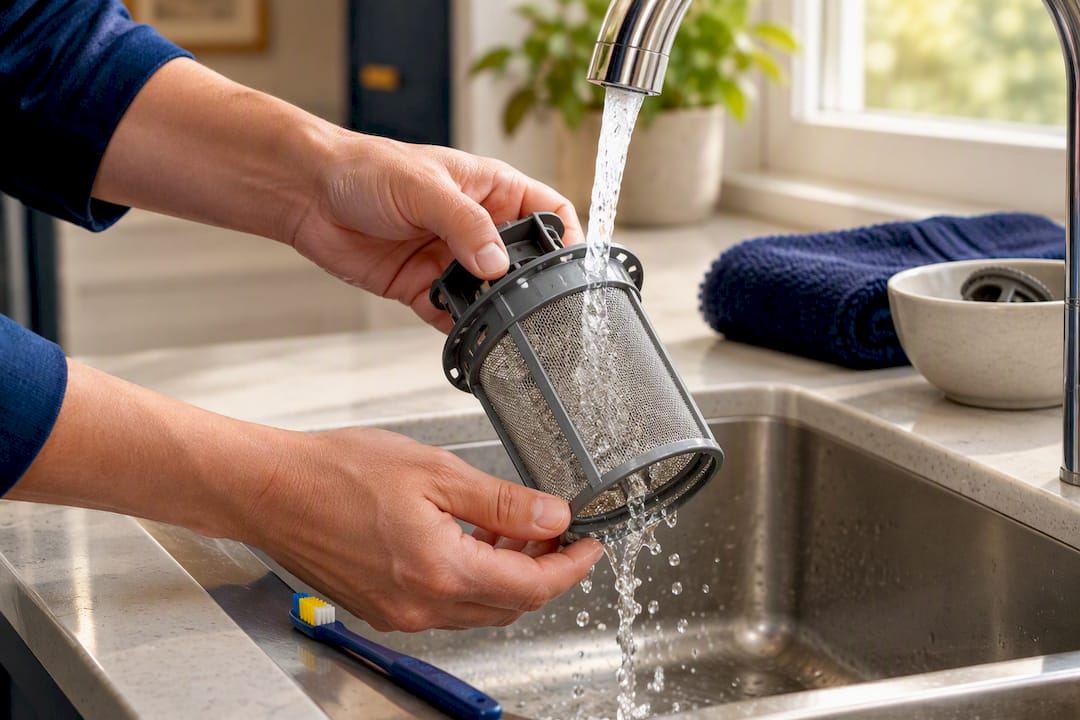
Why the filter matters more than most people think: a clogged filter doesn’t just fail to catch debris. It causes the machine to recirculate dirty water through every rinse cycle, which is one of the most common reasons dishes come out gritty even though the cycle “ran fine.”
Inspect and test the spray arms
Remove each spray arm (most just lift or unscrew) and hold it up to the light. Clogged holes show up as dark spots where water isn’t passing through. Clear them with a toothpick, not a metal pin, which can widen the hole and throw off the spray pattern.
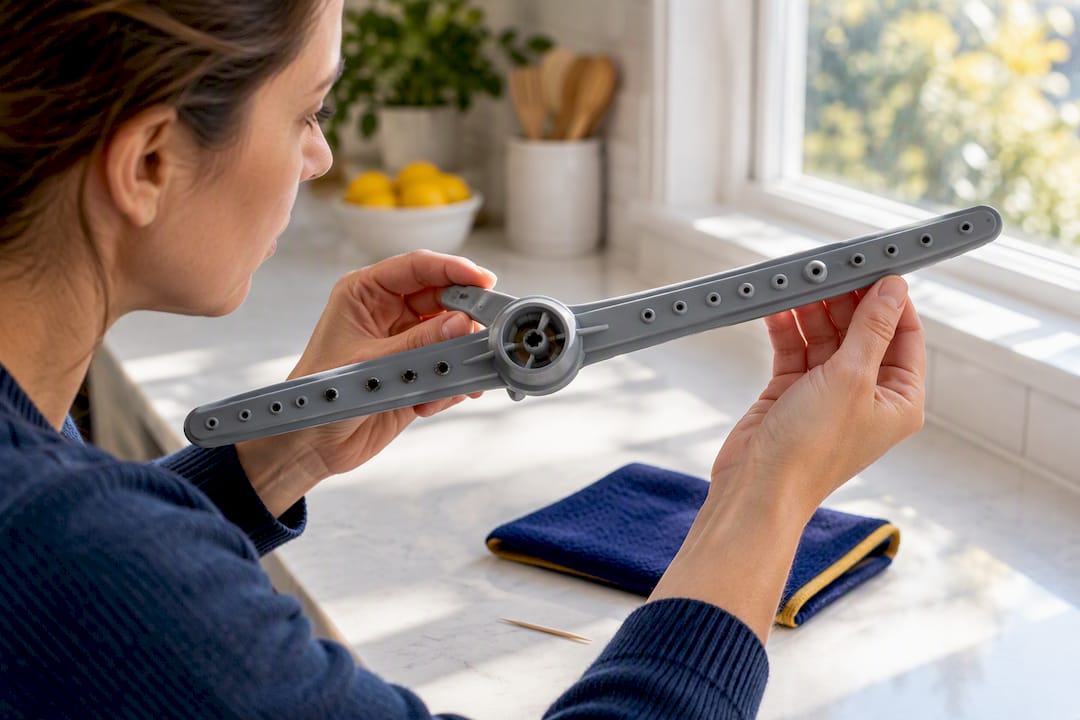
Reinstall the arm and spin it by hand. It should rotate smoothly with no wobble or resistance. For a mid-cycle check, run a short wash with an empty cup sitting upright on each rack; if the cups end up dry or barely wet, water isn’t reaching that level of the tub. Carefully cracking the door open mid-cycle to glance at spray force is another useful test. Weak spray despite clean, clear arms usually points past the arms themselves and toward the pump.
Fix loading mistakes that block spray coverage
Tall pots, cutting boards, and utensils standing upright near the top rack often block the spray path or, worse, sit directly over the detergent dispenser. Bosch’s own troubleshooting guidance notes that items placed right above the dispenser lid can physically prevent it from popping open, so detergent never enters the wash water at all. Rearrange so nothing tall sits directly above the dispenser or blocks the upper spray arm’s sweep.
Check the detergent and dispenser
Old detergent pods absorb moisture and lose cleaning power, especially if stored somewhere humid like under the sink. Powder detergent can also clump and fail to dissolve fully in short or cool cycles. If you open the dishwasher after a cycle and find a dried, undissolved wad of detergent still sitting in the dispenser cup, that’s a clear sign the latch either isn’t opening or something is blocking it. Wipe the dispenser cup clean and test the latch mechanism with your finger. It should click open easily.
Test your water temperature
Cold or lukewarm incoming water is a quiet, frequently missed cause of poor cleaning. GE Appliances recommends a minimum incoming water temperature of 120°F (49°C) so detergent dissolves fully and cuts through grease. Run your kitchen faucet on hot, catch some in a cup, and check it with a kitchen thermometer. If it’s coming in cooler than that, check your water heater setting before blaming the dishwasher.
Water pressure matters too. Whirlpool specifies incoming water pressure between 20 and 120 psi (138 to 828 kPa) for the machine to fill properly. Pressure outside that range can cause weak fills that leave dishes only partially washed.
Clear the drain path
Pooling water in the tub bottom after a cycle points to a clogged drain basket, a kinked drain hose, or debris in the sink-side air gap if your model uses one. Clear visible debris from the basket first, then check the drain hose for kinks behind the machine. A partially blocked hose won’t stop the dishwasher from running, but it will leave dirty water sitting in the tub instead of draining fully between fills.
Rinse aid and hard-water buildup
Empty rinse aid reservoirs are an easy miss because the cycle still “works,” it just leaves glasses spotted and dull. Whirlpool’s product-help guidance points to rinse aid as the fix for spotting and filming caused by hard water. If a cloudy residue wipes off glasses with a little vinegar, it’s mineral deposit. If it resists and leaves a faint rainbow sheen, that’s likely permanent glass etching, which no amount of cleaning reverses. Running a citric acid or white vinegar maintenance cycle once a month or so in hard-water areas keeps mineral buildup off the spray arms and heating element.
When Basic Fixes Point to a Bigger Problem
If you’ve cleaned the filter, cleared the arms, fixed your loading, checked detergent and dispenser, confirmed hot water, and dishes are still coming out dirty, you’re likely dealing with a mechanical fault rather than a maintenance issue.
- The dispenser never opens at all, even after cleaning it and testing the latch by hand.
- Spray is weak or nonexistent despite spray arms that spin freely and holes that are clearly clear.
- You see standing water or leaks underneath or behind the machine.
- The dishwasher runs unusually quiet during the wash phase, or you hear grinding, humming, or clicking that wasn’t there before.
- Water never heats up, leaving dishes washed in cold or barely warm water even on a normal or heavy cycle.
A technician troubleshooting these symptoms typically checks the circulation pump, the drain pump, the heating element, and the dispenser solenoid, since a failure in any one of those parts can mimic a simple clog. For machines over 10 years old, it’s worth weighing repair against replacement once a quoted repair starts approaching a large share of what a new unit would cost.
Before you call, jot down your model number, list exactly what you’ve already tried, and snap a photo or short video of the problem. That prep alone can cut a diagnostic visit down considerably, since the technician isn’t starting from zero.
What Nearly 20 Years of Repair Calls Taught Us About Dirty Dishes
Across nearly 20 years of service calls, Another Cycle Appliance Repair sees the same three culprits again and again: a filter nobody’s cleaned in months, spray arms jammed by a stray fork or lid, and, less often but more seriously, a circulation pump that’s finally given out after years of mineral buildup grinding it down.
The pattern that stands out isn’t the mechanical failures. It’s how many of those failures trace back to skipped maintenance. A filter checked every 2 to 4 weeks and a citric-acid descaling cycle run every one to three months in hard-water areas prevent a large share of the service calls that start with “my dishwasher isn’t cleaning anymore.” Keeping rinse aid topped up does the rest of the heavy lifting on spotting and film.
A few habits save homeowners a service call entirely: don’t overfill the detergent cup, keep tall utensils away from the spray arm’s sweep path, and when you do book a repair, have your model number and symptoms ready. It cuts diagnostic time on both ends.
— Rich
Get Your Dishwasher Properly Diagnosed and Fixed
If you’ve worked through the filter, the spray arms, and the water temperature check and dishes are still coming out dirty, it’s time for a second opinion instead of another guess. Consider contacting a professional appliance repair service for in-home diagnosis, upfront repair quotes, and warranties on parts and labor to avoid surprise charges and uncertainty about repair quality.
Before your visit, have your model number, a short list of symptoms, and photos or video of the problem ready. It helps the technician arrive prepared instead of starting the diagnosis from scratch. Book a dishwasher repair directly, or if you’d rather stop chasing filter cleanings and descaling cycles yourself, look into the Platinum Appliance Care plan for $549 one-time, which covers scheduled preventive checks so small problems get caught before they turn into a dead pump.
Manufacturer Guidance Worth Bookmarking
For model-specific instructions, these are the references worth keeping handy: Whirlpool’s filter-cleaning guide, GE’s water temperature specs, Maytag’s breakdown of common cleaning failures, and Cascade’s maintenance and descaling steps. Each covers slightly different ground, and together they back up nearly every fix in this guide.
Sources
- Maytag — 5 reasons why your dishwasher is not cleaning
- Cascade — dishwasher maintenance and troubleshooting
FAQ
Why is my dishwasher suddenly not cleaning effectively?
A sudden drop in cleaning performance is almost always mechanical or maintenance-related rather than a settings problem. Check the filter first, since a clog there causes the machine to recirculate dirty water instead of draining it, then check spray-arm rotation and incoming water temperature.
Why is my dishwasher not coming out clean?
The most common causes are a dirty filter, blocked spray arms, low water temperature, or a loading mistake that blocks detergent release or spray coverage. Manufacturer troubleshooting guides list these same factors as the primary checks before assuming a part has failed.
Why are my dishes still dirty after running the dishwasher?
Dishes left dirty after a full cycle usually point to detergent that never dissolved, water that never reached the correct temperature, or grit recirculating through a clogged filter. Run the checklist in order: filter, spray arms, detergent, then water temperature, before assuming you need a repair.
What is the average lifespan of a dishwasher?
Most dishwashers last somewhere around 10 years with regular filter cleaning and occasional descaling. Once a machine passes that age and needs a major repair like a new pump or heating element, weigh the repair cost against buying new before committing.
Does Another Cycle Appliance Repair fix dishwashers that won’t clean properly?
Yes. Another Cycle Appliance Repair diagnoses and repairs dishwashers across Southern New Hampshire, covering common failures like pump issues, heating element problems, and dispenser faults, with transparent pricing and a one-year warranty on parts and labor.