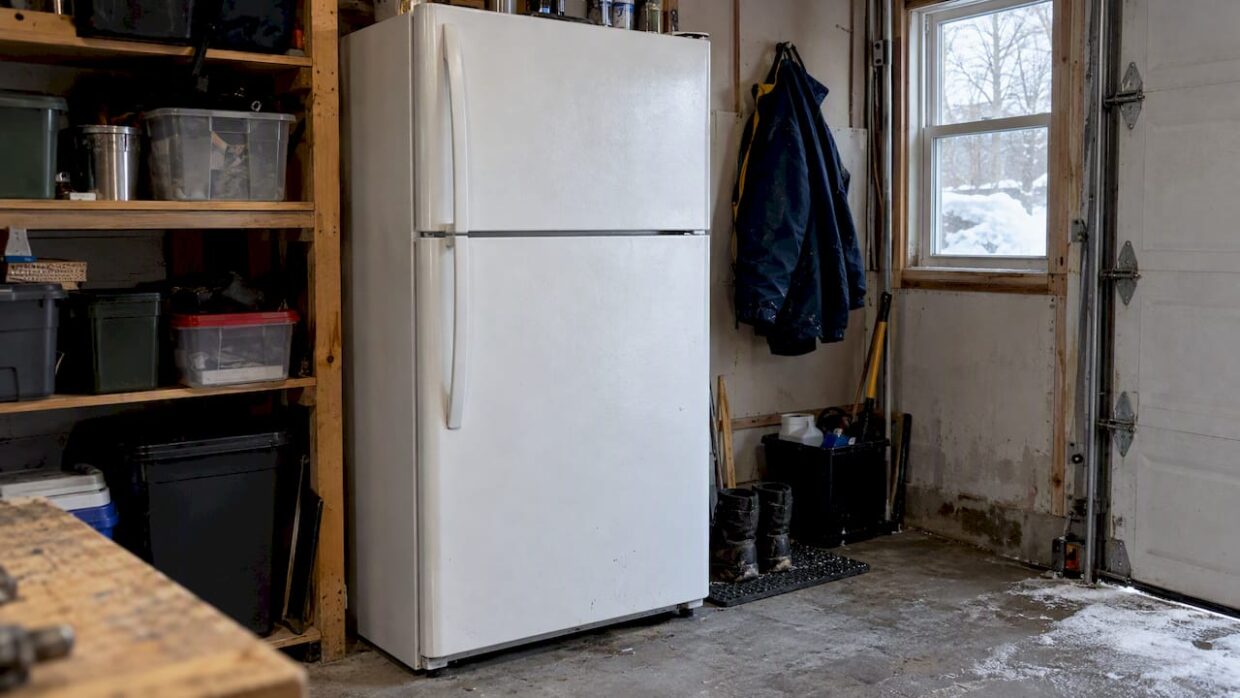
A standard refrigerator in a cold garage often stops cycling correctly because the frigid ambient air fools its internal controls, not because the compressor itself quits. Before assuming a mechanical breakdown, check the owner’s manual for garage-ready or garage-mode guidance, then run a short diagnostic checklist. In most cases, the fix starts with understanding how cold air confuses the thermostat rather than replacing the whole appliance.
TL;DR:
- Cold garage temperatures can cause thermostats to misread ambient air, leading to the compressor cycling less or not at all, which can thaw food or prevent cooling.
- Airflow blockages and improperly adjusted vents can result in uneven cooling, freezer warming, or a unit that refuses to run, especially in cold conditions.
- Waiting 24 hours after any control or vent adjustment is essential before assessing whether the fix has succeeded, and documenting changes helps track progress.
- Garage-ready models or controlling garage environment are the most reliable long-term solutions, especially when ambient temperatures frequently fall below standard unit ratings.
- Professional diagnosis for issues like no compressor activity, refrigerant leaks, or persistent warm temperatures is vital, as repairs can range from gasket replacements to sealed-system fixes.
Table of Contents
- How cold garages change refrigerator behavior
- Common failure modes and a diagnostic checklist
- Quick homeowner fixes to try this winter
- When to call a professional
- Preventing winter failures next season
- A local technician’s view on garage refrigerators
- Schedule a refrigerator check before the next cold snap
- FAQ
- Sources
How cold garages change refrigerator behavior
A refrigerator decides when to run its compressor based on how warm the air feels inside the cabinet. In a heated kitchen, that logic works fine. In a garage that drops into the 30s or lower, the thermostat can read the surrounding chill and conclude the unit is already cold enough, even when the fresh-food compartment is warming up. Maytag’s guidance on garage-ready design explains that non-garage-ready refrigerators can cycle less, or stop cycling altogether, in cold ambient conditions, which lets the freezer warm and thaw food.
Airflow compounds the problem. Most refrigerators pull cold air from the freezer and route it into the fresh-food section through internal vents. When those vents get blocked by packed food or mis-set airflow controls, the balance breaks down: either the fridge section freezes solid or the freezer struggles to stay cold enough.

Manufacturers address this with garage-ready models or a garage-mode setting built into the control board. Whirlpool’s product help notes that standard units are designed for climate-controlled indoor use, while garage-ready controls are calibrated for a wider ambient swing.
A few mechanics worth knowing before you troubleshoot:
- Thermostat logic reads ambient air, not just internal temperature, so cold garages can suppress normal cycling.
- Airflow vents carry cold air from the freezer to the fridge section, and blockages cause uneven cooling.
- Garage mode, when present, widens the ambient range the control board accepts as normal.
Common failure modes and a diagnostic checklist
Matching the symptom to the likely cause saves time and often avoids an unnecessary service call. A freezer running warm while the fridge section freezes food points to a control or airflow issue. A unit that won’t run at all points to power. Short cycling, where the compressor starts and stops repeatedly, often traces back to blocked vents or a control board struggling with extreme cold.
Work through these checks in order:
- Confirm the outlet has power and check whether a tripped GFI or breaker cut it off.
- Listen for compressor hum and fan noise; silence with power present suggests a control or start-component problem.
- Inspect freezer-to-fridge vents for ice buildup, food blocking airflow, or a misadjusted airflow knob.
- Check the door gaskets for gaps or cracks that let warm, humid garage air leak in.
- Verify the unit sits level, since an uneven cabinet can affect door seal and drainage.
- Check the ice maker’s state, since a stuck or overfilled ice maker can affect nearby airflow.
After any adjustment, including a reset, a vent clear, or a control change, Whirlpool’s troubleshooting guidance recommends waiting 24 hours before judging the result, since compartments take time to restabilize.
Pro Tip: Write down the date and time of any adjustment so you know exactly when the 24-hour window ends, instead of guessing later.
Quick homeowner fixes to try this winter
Several winter-specific problems respond to simple, safe fixes you can try before calling for repair.
- Confirm the refrigerator runs on a dedicated outlet, never an extension cord, and reset any tripped GFI.
- Clear ice or food blocking the freezer-to-fridge vents, and move stored items away from the airflow path.
- Nudge the airflow or temperature control one setting at a time, then wait a full 24 hours before making another change.
- Check door gaskets with the dollar-bill test: close the door on a bill and pull; resistance means a good seal, and easy slide-out means the gasket needs cleaning or replacing.
- Level the unit using its adjustable feet so the door seals evenly.
A few things to avoid along the way:
- Never plug the unit into an extension cord, even temporarily, since it can overheat or trip under compressor load.
- Avoid improvised space heaters near the appliance unless the owner’s manual explicitly allows garage heating, since manufacturers test their ambient ranges without added heat sources nearby.
- Don’t change more than one setting at a time, since it becomes impossible to tell which adjustment worked.
Frigidaire’s installation guidance commonly advises against installing a standard refrigerator where ambient temperatures fall below about 55°F unless the model is rated for colder conditions, which is worth checking before you troubleshoot further.
When to call a professional
Some symptoms point to something beyond a vent adjustment or a thermostat tweak. These red flags usually mean it’s time to book a technician rather than keep testing settings yourself:
- No compressor activity at all, even after confirming power and waiting 24 hours.
- Signs of a refrigerant leak, such as oily residue near the compressor or persistent warm temperatures despite the compressor running.
- Repeated short cycling that doesn’t resolve after clearing vents and checking gaskets.
- A freezer that stays warm for days despite adjustments, suggesting a sealed-system or control board fault.
Repair cost varies widely because the underlying problem varies widely. An electrical issue, a failed fan motor, a worn gasket, and a sealed-system leak each require different parts and labor, so a technician needs to diagnose before quoting a fixed price. Before a visit, gather the model and serial number, a timeline of when symptoms started, photos of the vents and gaskets, and a note on whether the unit is rated garage-ready. That information speeds up the diagnosis considerably.
Preventing winter failures next season
Once you’ve stabilized this winter’s problem, it’s worth deciding how to prevent a repeat next year. Three approaches hold up over time, each with its own tradeoffs:
- Buy a garage-ready model. These units are built with control systems calibrated for wider ambient swings, which is the most direct fix if you’re due for a replacement anyway.
- Relocate the unit. If the garage regularly drops below the manufacturer’s minimum ambient, moving the refrigerator to a basement or mudroom solves the root cause rather than managing around it.
- Improve the garage environment. Adding insulation, sealing gaps around the garage door, and only using heating methods the owner’s manual permits can raise ambient temperatures enough to keep a standard unit within range. One Day Doors & Closets covers practical door-sealing steps that help stabilize garage temperatures overall.
Humidity matters too. New Hampshire winters bring damp, variable air into garages, and condensation around door seals or vents can accelerate wear on gaskets and electrical components over several seasons.
A seasonal maintenance plan catches small issues, a slipping gasket or a dirty coil, before they turn into a cold snap failure.

Pro Tip: Schedule a pre-winter check in October or November, before the first hard freeze, so any adjustments have time to stabilize before temperatures drop.
A local technician’s view on garage refrigerators
Winter garage refrigerator calls follow a pattern we’ve come to recognize over nearly 20 years of family-owned repair work across Southern New Hampshire: a freezer that’s warming, a fresh-food section that’s freezing, or a unit that seems dead until you check the vents. Most of these trace back to control or airflow issues rather than a failed compressor. Our advice to homeowners is simple: document when the symptom started, resist the urge to open up the sealed refrigerant system yourself, and book a pre-winter check if your garage runs cold every year. Every repair we complete is backed by a warranty on parts and labor.
— Rich
Schedule a refrigerator check before the next cold snap
When a garage refrigerator starts acting up, we send a technician to your home for an in-home diagnostic and provide a transparent estimate before any work begins. Our refrigerator repair service covers the control, airflow, and sealed-system issues winter garages tend to cause, and our Platinum Appliance Care plan at $549 one-off builds in the seasonal checks that catch problems before the cold does.
FAQ
Why does my garage freezer warm up in winter?
Cold ambient air can trick the thermostat into reading the unit as already cool enough, so the compressor cycles less often and the freezer warms. Manufacturer guidance from Maytag confirms this control mismatch as a common cause in non-garage-ready models.
What does “garage-ready” actually mean?
A garage-ready refrigerator has a control system calibrated to work across a wider ambient temperature range than a standard model. Some manufacturers specify an operating range around 38°F to 55°F for garage-mode settings, while standard units assume a stable indoor climate.
How long should I wait after adjusting the controls?
Wait a full 24 hours after any control adjustment, vent clearing, or power restoration before judging whether it worked. Whirlpool’s control-setting guidance recommends this window because compartments take time to restabilize.
Can I use a space heater to keep my garage refrigerator running?
Only if your owner’s manual explicitly allows added heat near the unit, since manufacturers test their ambient ranges without extra heat sources nearby. A safer long-term fix is a garage-ready model, relocation to a climate-controlled space, or garage insulation improvements.
How much does it cost to repair a garage refrigerator?
Cost depends on whether the problem is electrical, airflow-related, a worn gasket, or a sealed-system fault, so a technician needs to diagnose the specific cause before quoting a price. We offer in-home diagnostics with a transparent estimate through our refrigerator repair service before any repair work begins.
Sources
- How Garage-Ready Refrigerators Work – Product Help | Maytag
- How Garage-Ready Refrigerators Work – Product Help | Whirlpool
- Freezer – Not Freezing or Not Cooling | Frigidaire