A smelly washer almost always comes down to moisture, detergent residue and organic buildup that never fully dries out. Most of the time you can fix it in an afternoon: wipe the door gasket, scrub the detergent drawer, clean the drain filter and run a hot maintenance cycle with a washer cleaner. If the smell comes back within a week or two of a proper cleaning, or comes with slow draining, standing water or a burning odor, the problem is mechanical and worth a technician’s visit.
Below is what causes the smell, how to tell the types apart, a step-by-step cleaning routine, the vinegar question, and the habits that keep the odor from returning.
TL;DR
- Washer odors come from damp, sealed drums, leftover detergent film and trapped lint, hair and grime, not from dirty laundry alone.
- Wipe and dry the gasket, scrub the detergent drawer, clear the drain filter, then run a hot or sanitary cycle with a washer cleaner made for the job.
- Use HE detergent in HE machines, pull wet laundry out promptly and leave the door ajar between loads.
- Never mix cleaning products in the drum, and check your manufacturer’s advice before putting vinegar through a cycle.
- A smell that returns fast, or comes with drainage trouble, points to a repair problem. We can diagnose it in your home in Southern New Hampshire.
Table of Contents
- Why washing machines smell in the first place
- What the smell tells you
- How to get rid of the smell, step by step
- Does vinegar clean a washing machine?
- Top-loader or front-loader: where smells hide
- How to keep the smell from coming back
- When the smell is a repair problem
- Perspective: what we see in Southern NH homes
- Need a technician instead?
- FAQ
- Sources
Why washing machines smell in the first place
A washer is warm, wet and dark for much of its life, and it is closed up tight when you are not using it. That is a good home for bacteria and mold. The industry group that represents appliance makers lists several common contributors: damp, closed laundry spaces, organic material carried in on clothes, tightly sealed water-efficient machines, and a shift toward less bleach, more fabric softener and more cold-water washing.
That last point matters. A bioengineer quoted by Wirecutter notes that the move to lower-temperature washing machines in the 1990s created friendlier conditions for bacteria to settle in. Cold cycles save energy, but they do not break down body oils and detergent residue as well as hot ones.
Detergent is the other half of the story. In high-efficiency (HE) machines, regular detergent can make too many suds, and the leftover film feeds odor, mold and mildew. LG’s support team adds that natural laundry soaps are more likely to encourage microbial growth than standard HE-formulated detergents.
What the smell tells you
The odor itself is a clue. These are the patterns we see most often on service calls, and what each usually means.
| Smell | Most likely cause | Where to look first |
|---|---|---|
| Musty, mildew, damp towel | Trapped moisture and detergent film | Door gasket, detergent drawer, drum |
| Sour, like old milk | Residue and bacteria from fabric softener or too much detergent | Drawer, dispenser, drum |
| Rotten egg or swampy | Stagnant water, debris or buildup in the drain path | Drain filter, hoses, standing water |
| Burning or hot rubber | Mechanical problem, not a cleaning problem | Stop using the washer and call a technician |
The first three are usually cleanable at home. The last one is not. If you smell something burning, unplug the machine and stop running loads until it has been looked at.
How to get rid of the smell, step by step
Set aside about an hour, most of it waiting on the cleaning cycle. You need a dry cloth, an old toothbrush, a small bucket or shallow pan, and a washing machine cleaner or liquid chlorine bleach, whichever your manual recommends.
1. Wipe and dry the gasket
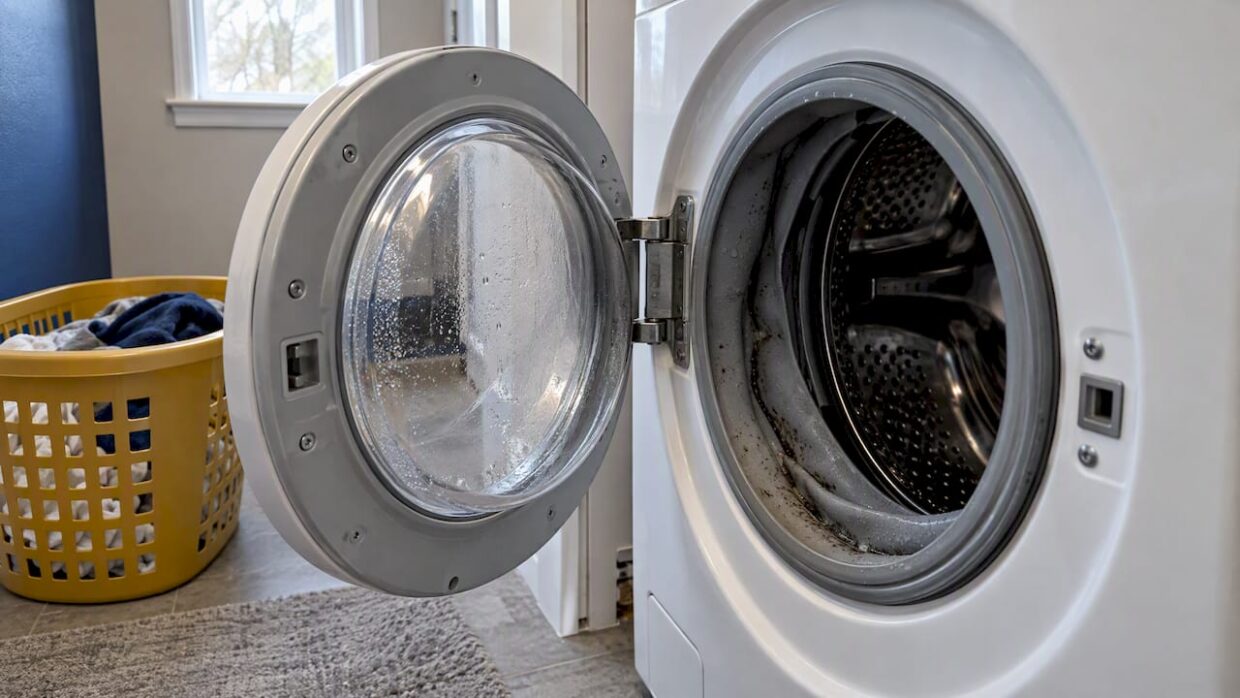
Front-loaders hold water in the rubber door seal, and that fold is one of the most common spots for mold and mildew. Wirecutter points out that these gaskets need to be wiped down and dried by hand and checked for trapped hair or small items such as socks and coins. Pull the rubber back gently and wipe all the way around the fold. Black speckles that come off on the cloth are mold.
2. Clean the detergent drawer
Most drawers slide out, and many have a release tab. Pull it, scrub it with warm soapy water and the toothbrush, and rinse. Clean the cavity the drawer sits in too, since residue builds up there. Consumer Reports recommends cleaning the drawer routinely and leaving it open between loads so moisture can escape.
3. Clear the drain filter
Many front-loaders have a small access panel at the bottom front. Set a shallow pan underneath, because water will come out, then unscrew the filter and remove whatever has collected. Hair, lint, coins and fabric bits all end up here, and they hold water that turns smelly. Wirecutter’s routine includes opening the access panel and removing debris as part of regular cleaning.

If the filter is clogged badly, or you see standing water in the drum, the washer may also have a drain issue. Our page on a washer that is not draining walks through what to check.
4. Run a hot cleaning cycle
If your washer has a tub-clean or self-clean feature, use it. If it does not, Consumer Reports advises running the sanitary cycle or a hot-water cycle with a washing machine cleaner that contains bleach, about once a month. Follow the label on the product and the instructions in your owner’s manual, because cycle names and dosing differ between brands.
If you are managing a rental and unsure what to tell a tenant, a short written cleaning routine can head off odor complaints, and this rental property maintenance guide covers the wider upkeep picture.
5. Wipe down and leave it open
When the cycle ends, wipe the gasket and the inside of the door glass again, then leave the door and drawer open so the drum dries fully. That simple step does more over the long run than any product.
A warning about mixing products
Never combine cleaners in the drum. Real Simple stresses that it is extremely important never to mix different cleaning products inside the washer because they can react dangerously. Bleach and vinegar is the pairing people try most often, and it is the one to avoid. Run one product per cycle, then rinse with a plain cycle if you want to switch.
Does vinegar clean a washing machine?
Vinegar is the most popular home fix, and it shows up in many of the top search results. It is also contested. Maytag, a washer manufacturer, says that vinegar’s acidity can wear down rubber seals and hoses over time and recommends a cleaner made for washing machines instead.
Our view, from years of opening up washers: a single vinegar cycle is unlikely to ruin a machine, but regular use on a machine with rubber seals and hoses is a risk you do not need to take. Check your owner’s manual. If it names a cleaner or a procedure, use that. If you are still inside the warranty period, using something the manufacturer does not recommend can also give them a reason to argue a claim.

Top-loader or front-loader: where smells hide
Front-loaders are the worst offenders because of the gasket, but top-loaders are not immune.
- Front-loaders: the gasket fold, the drawer, the drain filter and the door glass. Keep the door cracked open.
- High-efficiency top-loaders: the underside of the lid, the dispenser cups, and the area under the agitator or impeller where lint collects. Wipe what you can reach and run the tub-clean cycle.
- Older agitator top-loaders: these use more water and tend to smell less, but fabric softener buildup around the dispenser and tub rim still happens.
If you bought a used washer or moved into a home with one, assume it has buildup. Clean it before the first load, as you would a secondhand dishwasher.
How to keep the smell from coming back
Cleaning clears the problem. Habits keep it away. The appliance industry’s consumer guidance boils prevention down to a few steps: follow the detergent instructions, use HE detergent in HE washers, take wet laundry out promptly, increase airflow, and run a monthly hot-water cycle with bleach or a washer cleaner if your manual has no specific instructions.
Put into practice:
- Measure detergent. More soap does not mean cleaner clothes. In a washer that uses little water, extra soap does not rinse out.
- Go easy on fabric softener. It leaves a coating that traps grime. Use less, or skip it for towels and workout clothes.
- Unload right away. Wet clothes left in a closed drum start smelling musty quickly. If you forget a load, rewash it before drying.
- Keep the door and drawer open between loads, as Consumer Reports suggests, so moisture can escape.
- Run a hot wash once in a while. Towels and bedding on a hot cycle give the drum a good flush.
- Ventilate the laundry space. A closed basement closet with no airflow keeps humidity high. A fan or a cracked door helps, and in many New Hampshire homes a dehumidifier in the laundry area is worth it in summer.
When the smell is a repair problem
Cleaning will not fix a machine that is holding water it should be pushing out. Call a technician if you notice any of these:
- The smell returns within days of a thorough cleaning.
- Water sits in the drum after the cycle, or the washer drains slowly.
- The washer is out of level. Consumer Reports notes that wash water will not drain properly if the machine is not level, so check it periodically. Adjustable feet and a level on top of the washer will tell you.
- You see leaks around the door, the pump or the hoses.
- There is a burning or electrical smell, at any time.
- The washer also fails to spin or agitate, which can come along with stuck water and odor. Our guides on a washer that won’t spin and one that won’t agitate cover the checks to try first.
Do not keep running a washer that has a burning smell or is leaking near electrical parts. Unplug it and call.
Perspective: what we see in Southern NH homes
We have been repairing appliances for nearly 20 years, and washer smells are one of the calls where the fix is often simpler than people fear, and sometimes more serious than they hoped. A lot of the time, the homeowner has done the right things and the smell lingers because of a partly blocked drain path or a washer sitting slightly off level. Other times, a cleaning and a change in detergent habits is all it takes, and we will tell you so rather than sell you a repair you do not need.
That is how we run every visit: we explain what we found, quote clearly, and give you an honest repair-or-replace view. A washer that is only a few years old with a clogged filter is a cleaning job. An older one with a failing pump and a rusted drum may not be worth a big repair, and we will say that too. Whatever we repair carries a one-year warranty on parts and labor.
— Rich
Need a technician instead?
If you have cleaned the gasket, drawer and filter, run a proper cycle, and the smell is still there, we can come to you. Our washing machine repair service covers in-home diagnosis and repair across Southern New Hampshire, and the work is backed by a one-year warranty on parts and labor. If you would rather prevent problems before they start, our Platinum Appliance Care plan is available for $549 one-off, and the plan page lists what it covers. You can also see everything we repair on our appliance repair page.
FAQ
Why does my washing machine smell even though I use it every day?
A washer that runs often can still smell because the drum stays closed and damp between loads. Residue from too much detergent or fabric softener, plus lint and hair in the gasket or filter, give odor-causing bacteria something to live on. Leaving the door open and cleaning the gasket, drawer and filter usually solves it.
How often should I clean my washing machine?
Consumer Reports suggests running a hot or sanitary cycle with a washer cleaner monthly if your washer has no tub-clean feature. Wipe the gasket and check the drawer more often than that, ideally after every few loads.
Can I use bleach and vinegar together to clean the washer?
No. Mixing cleaning products in the washer can cause dangerous chemical reactions, as Real Simple warns. Use one product at a time, as your manual directs, and run a plain rinse cycle before trying another.
Is a moldy smell from my washer dangerous?
Mold in a washer is unpleasant and can leave clothes smelling musty, so it is worth removing promptly. If anyone in your household has asthma, allergies or a mold sensitivity, talk to their doctor about what to avoid. Clean the washer with the cleaner and method your manufacturer recommends.
When should I call a repair technician about the smell?
Call if the smell comes back soon after cleaning, water stays in the drum, the washer drains slowly, there is a leak, or you notice a burning odor. Those point to a drain, pump or electrical problem that cleaning will not fix.
Sources
- Consumer information on clothes washers and odor, mold and mildew (AHAM)
- How to Minimize Mold in Your Washing Machine (Consumer Reports)
- How to Clean Washing Machine (Wirecutter)
- Troubleshooting Musty Odors (LG USA)
- How to Clean Your Washing Machine to Get Rid of Odors (Real Simple)
- Stop Using Vinegar to Clean Your Washing Machine (Maytag)