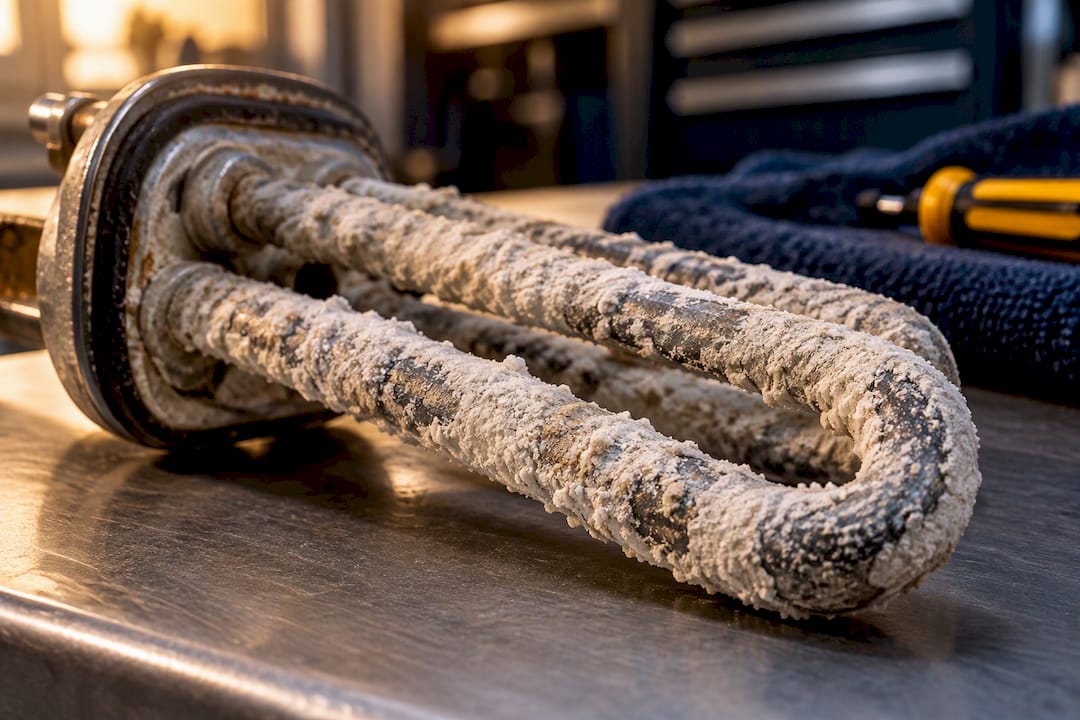
Hard water deposits, mainly calcium and magnesium, coat heating elements, valves and seals inside your appliances. That buildup reduces heat transfer, blocks moving parts, and drives up energy use and repair bills over time. Testing your water and pairing it with routine maintenance or targeted treatment prevents most of this damage before it starts.
TL;DR:
- Regular descaling of appliances and annual water heater flushes can prevent most damage caused by hard water deposits.
- Household water quality, especially calcium, magnesium, and iron levels, significantly impacts appliance efficiency and lifespan.
- Tankless water heaters and electric units are particularly vulnerable to scale buildup, which can reduce performance by 25% to 40%.
- A simple home test for water hardness, combined with targeted maintenance, often suffices without needing costly whole-house softening systems.
- Professional repair visits frequently fix scale-related damage, but proactive testing and maintenance can substantially lower emergency repairs.
Table of Contents
- How mineral scale forms and why it damages appliance parts
- Water heaters: how scale shortens the life of tanks and tankless units
- Dishwashers, coffee makers and small appliances: symptoms and fixes
- Washing machines, dryers and plumbing fixtures: mechanical wear and flow issues
- How to tell if hard water is the problem: signs and reliable tests
- Prevention and fixes homeowners should prioritize
- What local technicians actually see on hard-water repair calls
- What the research actually supports about hard water damage
- How to get help from Another Cycle Appliance Repair
- Sources
- FAQ
How mineral scale forms and why it damages appliance parts
Calcium and magnesium dissolve invisibly in water until heat or evaporation forces them out of solution. When that happens, the minerals crystallize into a hard, chalky layer that clings to whatever surface it touches: heating elements, pipe walls, valve seats, spray nozzles. The hotter the water, the faster this happens, which is why water heaters and dishwashers tend to scale before a cold-water fixture ever will.
Scale causes trouble in two distinct ways. First, it insulates. A layer of mineral deposit on a heating element acts like a blanket, forcing the appliance to work harder and longer to reach the same temperature. Second, it clogs. Narrow passages, spray armholes, solenoid valves, thermostat sensors, are exactly the kind of tight spaces where scale accumulates fastest and chokes water flow.
A standardized laboratory protocol measured just how quickly this happens under controlled conditions: researchers documented 25.1 grams of calcium carbonate scale forming in about five days, and found that scale reduction technologies varied from 0% to 100% effectiveness depending on the method tested.
Beyond mechanical wear, scale changes how appliances perform day to day:
- Dishes and glassware come out spotted or filmed because minerals interfere with detergent’s ability to rinse cleanly.
- Clothes can feel stiff or look dingy because detergent can’t fully dissolve or rinse in hard water.
- Coffee and tea taste flat or bitter as scale coats the elements that heat the water.
Water heaters: how scale shortens the life of tanks and tankless units
Water heaters take the hardest hit from mineral buildup, and the damage looks different depending on the type of unit.
- Electric tank heaters tolerate scale for a while, but once deposits bury the lower heating element, that element commonly burns out and needs replacement.
- Gas tank heaters lose recovery speed as scale coats the bottom of the tank, insulating it from the burner below and forcing longer burn cycles.
- Tankless units scale the fastest of all because they heat water on demand at high temperatures, and manufacturers often recommend descaling, or “deliming”, on a regular schedule to keep them running.
The PNNL report on residential water heating equipment found that water quality significantly affects heater performance, with scale reducing efficiency and shortening equipment life, and flagged tankless systems as particularly vulnerable. The same body of research suggests households that control scale buildup can extend appliance life by 25% to 40% compared to units left unmaintained.
Statistic callout: Standardized testing measured 25.1 grams of scale forming in roughly five days, which shows how fast untreated hard water can coat a heating element in a real household.
Annual tank flushing and periodic anode rod checks catch most of this early, before a full element or tank replacement becomes the only option.
Dishwashers, coffee makers and small appliances: symptoms and fixes
Small appliances show hard water damage first because they heat water in tight, enclosed spaces. Spray arms clog, glassware turns cloudy, and coffee makers or kettles develop a chalky film on their heating elements that slows how quickly they boil.
- Check spray arm holes on the dishwasher for visible white deposits and clear them with a toothpick or soft wire if flow looks weak.
- Run a citric acid or food-safe descaling solution through coffee makers and kettles every few weeks in hard water areas, more often than manufacturers recommend for soft water.
- Use a rinse aid formulated for hard water in the dishwasher, since detergent alone struggles to prevent spotting when mineral content is high.
- Call a technician when a dishwasher or coffee maker stops heating altogether. A buried element usually means replacement rather than a home fix.
Pro Tip: Undiluted white vinegar works for many kettles and coffee makers, but check your owner’s manual first, since some rubber seals and gaskets degrade faster with repeated vinegar use.
Washing machines, dryers and plumbing fixtures: mechanical wear and flow issues
Laundry appliances suffer in quieter ways than water heaters, but the wear adds up. Mineral deposits foul detergent dispensers, clog inlet valves, and accelerate pump wear as grit-like scale particles circulate through moving parts. Faucet aerators and shower heads lose flow the same way, one thin layer at a time.
- Inlet valves and solenoids are common failure points in washing machines running on hard water for years without maintenance.
- Softening water reduces scale, but overly soft water can raise corrosion risk in metal fittings, so testing for pH and iron alongside hardness gives a fuller picture before choosing treatment.
- Minor scale buildup often responds to descaling and cleaning cycles, while a failed valve, pump or sensor usually calls for part replacement rather than a maintenance fix.
How to tell if hard water is the problem: signs and reliable tests
Some signs are easy to spot, others show up only in your utility bill or a repair call.
- Look for white or chalky residue around faucets, showerheads and inside the dishwasher or kettle.
- Watch for weak water flow, spotted dishes, stiff laundry, or unusual noises from the washing machine or water heater.
- Buy a home hardness test strip for a fast, rough reading of grains per gallon or parts per million. The USGS explains hardness measurement and typical ranges homeowners can expect.
- If you’re on a private well, follow NHDES guidance on well testing, which recommends checking hardness alongside iron, pH and bacteria, and retesting after installing any treatment system.
- Request a full lab panel, not just a hardness number, before choosing a softener or filter so the treatment matches your actual water chemistry.
Prevention and fixes homeowners should prioritize
Start with the cheap, fast fixes, then decide whether a permanent treatment system makes sense for your home.
- Short-term: descale coffee makers and kettles regularly, flush your water heater tank annually, and inspect the anode rod for early signs of corrosion.
- Medium-term: replace a failing heating element or inlet valve as soon as symptoms appear rather than waiting for a full breakdown.
- Long-term: consider an ion-exchange water softener for moderate to high hardness, a salt-free conditioner for lighter mineral content, or a point-of-use filter if iron or sediment is also a concern.
Softeners need regular salt refills and periodic regeneration cycles, and extension research cautions that softened water can raise corrosion risk in tanks and fittings, which is why anode rod checks matter even more after installation. A softener represents a bigger upfront decision than descaling, but it addresses the source rather than the symptoms.
Pro Tip: If you install a softener, check the water heater’s anode rod within the first year and annually after that, since softened water can accelerate anode wear.
What local technicians actually see on hard-water repair calls
Repair visits tied to hard water tend to repeat themselves: burned-out water heater elements, clogged dishwasher spray arms, and washing machine inlet valves fouled with scale. A maintenance plan that catches these issues early cuts down on repeat failures and emergency calls. Appliance repair services offer in-home diagnosis and repair with a warranty on parts and labor.
What the research actually supports about hard water damage
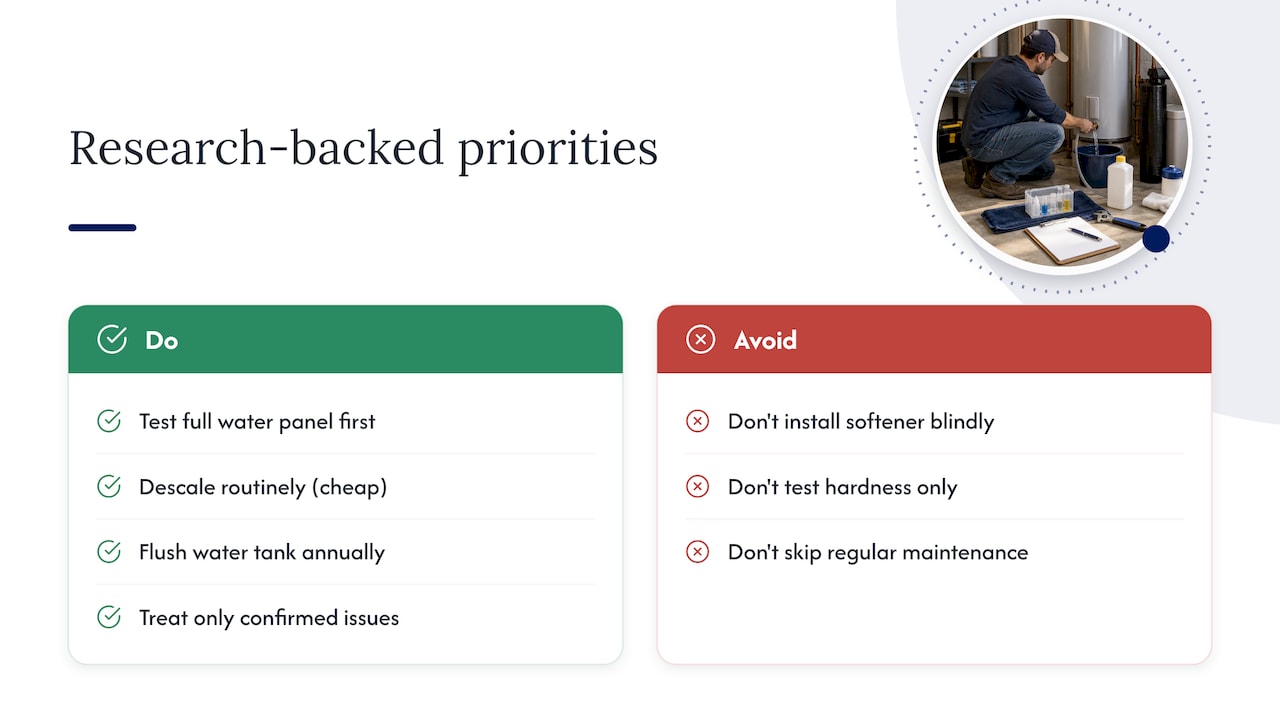
The research is clear that scale reduces efficiency and shortens equipment life, but the popular advice to “just install a softener” oversimplifies the fix. Softening addresses calcium and magnesium, yet it does nothing for iron, pH imbalance or the corrosion risk that overly soft water can introduce to metal tanks and fittings. Homeowners who test only for hardness and skip the rest of the panel often trade one problem for another a few years later.
What gets underestimated is maintenance discipline. A cheap descaling routine and an annual tank flush prevent more damage than most people expect, and they cost far less than a softener installation. The priority isn’t picking the fanciest treatment system, it’s testing first, maintaining consistently, and treating only what your water actually needs.
— Rich
How to get help from Another Cycle Appliance Repair
Hard water damage rarely announces itself until an element burns out or a valve fails, and by then a repair beats a replacement on both cost and time. Appliance repair providers handle appliances affected by hard water with transparent pricing and warranties on parts and labor.
- Washing Machine Repair for scale-fouled valves and worn pumps.
- Dishwasher Repair for clogged spray arms and heating element failures.
- Platinum Appliance Care, a $549 one-off maintenance plan built to catch scale-related wear before it becomes a breakdown.
Schedule a visit and get a straight answer on whether your appliance needs a repair or a full maintenance checkup.
Sources
- Impacts of Water Quality on Residential Water Heating Equipment (PNNL-22921)
- A Standardized Test Protocol for Evaluation of Scale Reduction Technologies (PMC)
- Hardness of water (USGS)
FAQ
How long does it take for hard water to damage appliances?
Damage timelines vary by appliance and hardness level, but standardized lab testing measured 25.1 grams of scale forming in about five days under controlled conditions. In real homes, visible symptoms like spotting or reduced flow often show up within months, while element failure in water heaters can take a year or more depending on usage and hardness.
Which state has the worst hard water?
Hardness varies widely by region and even by well within the same town, so there’s no single answer to which state has it worst. The USGS explains how hardness is measured in parts per million or grains per gallon, and testing your own water is the only reliable way to know where you stand.
What removes hard water naturally?
No treatment removes hardness without some form of filtration or ion exchange, though boiling and settling can reduce temporary hardness slightly. Ion-exchange softeners remain the most common approach for calcium and magnesium, while descaling with citric acid or vinegar clears existing buildup from appliances rather than preventing new deposits.
What is the cheapest way to convert hard water to soft water?
A salt-based ion-exchange softener is the standard long-term fix, though it carries ongoing salt and maintenance costs. For a lower upfront cost, regular descaling of individual appliances, like water heaters, coffee makers and dishwashers, prevents most damage without installing a whole-house system.
Do all hard water problems require a whole-house softener?
Not always. Testing for hardness, iron and pH first, as NHDES recommends for private wells, often shows that targeted maintenance, like annual water heater flushing and appliance descaling, solves the problem without the cost and upkeep of a full softener system.