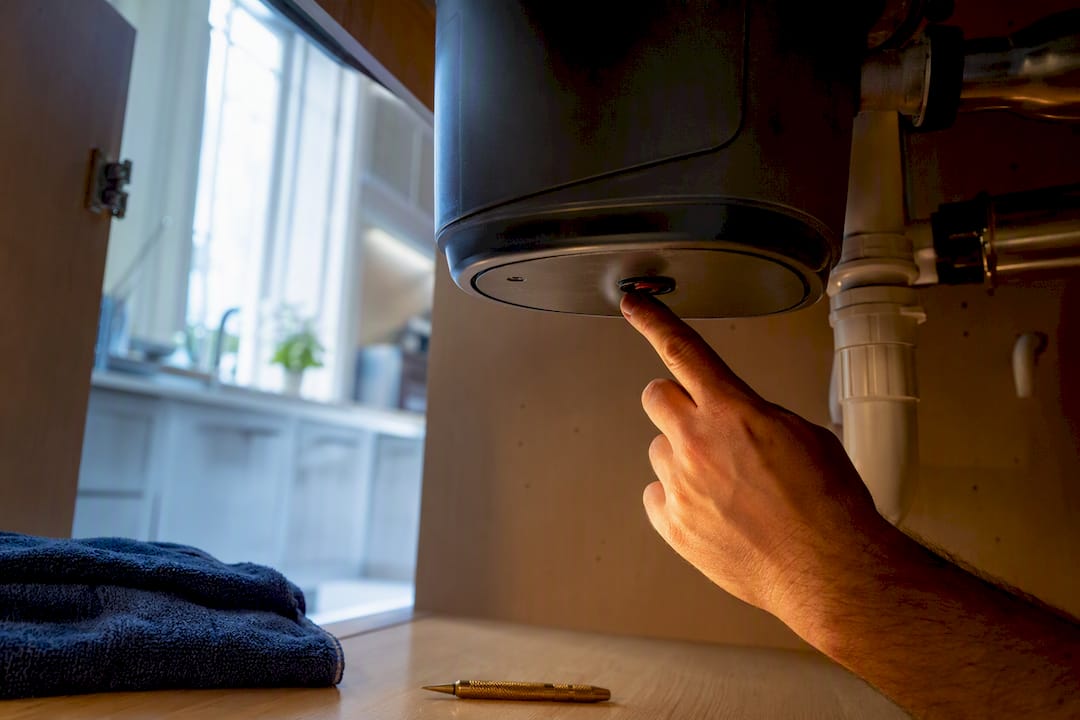
On most units, the garbage disposal reset button is a small red or black button on the bottom or lower side of the unit, near the power cord. If your disposal has gone silent or is humming without grinding, cutting power and pressing that button often brings it back. But check for a jam first. If it hums after resetting, the flywheel is still stuck.
TL;DR:
- The reset button is usually located at the bottom or side of the disposal, near the power cord, and often requires a flashlight to locate.
- Resetting the disposal only trips a thermal overload protector, which prevents motor damage from overheating caused by jams, overloading, or continuous use.
- If the disposal hums without spinning or is silent, you should first clear any jam and ensure the motor isn’t overheated before attempting to reset.
- Manually freeing a jam involves inserting an Allen wrench into a hex hole at the bottom center of the unit and turning it clockwise to release obstructions.
- Repetitive resetting failures, burning smells, leaks, or age beyond eight years indicate the need for professional repair or replacement rather than continued DIY troubleshooting.
Table of Contents
- Where to look for the reset button on most garbage disposals
- What does the disposal reset button actually do?
- Is your disposal silent or humming? That tells you what to try next
- How to safely reset a garbage disposal step by step
- What if the reset button won’t hold or the disposal still hums?
- Safety rules and the tools this job actually needs
- Everyday habits that keep the reset button from tripping
- What years of appliance repair calls teach you about this fix
- How to get professional disposal repair if the reset doesn’t fix it
- Sources
Where to look for the reset button on most garbage disposals
Get down on the floor with a flashlight and look at the underside of the disposal, the metal canister mounted below your sink drain. That’s where you’ll usually find it.
- Bottom, facing the floor: most common spot, especially on InSinkErator and Waste King units. InSinkErator’s own support documentation confirms the overload protector sits on the bottom and drops out slightly when it trips.
- Lower side, opposite the power cord: common on some KitchenAid and Whirlpool models.
- A small red or black square or round button, usually recessed enough that you’ll feel it pop before you see it.
Can’t find one at all? Some disposals don’t have a visible reset, especially hard-wired units or older models. Check your under-sink outlet for a GFCI reset, or check the manual for a hidden panel. Batch-feed disposals (the kind with a stopper you twist to start) behave differently than continuous-feed units with a wall switch, but the reset button location doesn’t change based on that.
What does the disposal reset button actually do?
The reset button isn’t a power switch. It’s a thermal overload protector, essentially a miniature circuit breaker built into the motor housing to keep it from burning itself out.
When the motor draws too much current, heat builds up fast. The protector trips and cuts power before the windings cook. This happens more often than most homeowners realize — a jammed flywheel, a load that’s too big, or a disposal that’s been running continuously for too long can all trigger it in seconds. One trip after grinding a tough load is normal. Repeated trips within the same day, or a button that won’t stay depressed no matter how many times you press it, point to something more serious: a worn motor, a wiring fault, or a jam you haven’t fully cleared yet.

Is your disposal silent or humming? That tells you what to try next
The sound your disposal makes when it fails tells you exactly what’s wrong before you even open it up.
- Completely silent, no sound at all: usually a tripped overload or a power interruption. Safe to check power, then press the reset.
- Humming, but nothing spins: the motor has power, but the flywheel is physically jammed. Don’t press reset yet, you need to clear the obstruction first or the motor will just trip again.
- Burning smell, visible leaks, or repeated tripping within minutes of resetting: stop. This is beyond a quick fix, and running it further risks damaging the motor or exposing you to an electrical hazard.
Getting this diagnosis right saves you from cycling through the same failed reset over and over.
How to safely reset a garbage disposal step by step
This takes about five minutes if the unit isn’t jammed, longer if you need to clear debris first. Follow the order below, don’t skip the power check.
- Cut the power completely. Flip the wall switch off, then unplug the disposal from under the sink. If it’s hard-wired with no plug, shut off the breaker instead, that’s your only option for hard-wired units.
- Inspect the grinding chamber with a flashlight. Look down through the drain opening for silverware, bottle caps, fruit pits, or anything solid. Remove anything you see with long-nose pliers or kitchen tongs. Never use your fingers.
- Locate the reset button and press it firmly until it clicks. InSinkErator’s guidance is clear that it should stay depressed after a proper reset. If it won’t hold, the motor may still be too hot. Give it ten minutes to cool and try again.
- Restore power and test with cold water running. Plug it back in, flip the switch, run cold water into the sink, and turn the disposal on briefly. If it grinds normally, you’re done.
KitchenAid’s own product support page walks through this same sequence, which tells you it’s the standard fix across manufacturers, not a workaround.
Pro Tip: Always run cold water during the test, not hot. Cold water keeps grease solid so it grinds and flushes away instead of coating the blades and chamber walls.
What if the reset button won’t hold or the disposal still hums?
A reset that won’t stay in almost always means the flywheel is still physically blocked. Pressing it repeatedly won’t fix that. You need to free the jam manually.
- Find the hex-shaped hole in the bottom center of the unit and insert the manufacturer’s Allen wrench (usually 1/4 inch). Working the wrench clockwise and then back frees most jams without ever removing the disposal.
- Confirm the unit is actually plugged in, and reset any GFCI outlet under the sink; a tripped GFCI looks identical to a tripped disposal from the outside.
- Check your home’s main breaker panel. A disposal breaker switch that’s flipped will keep the unit dead no matter how many times you press reset.
| Symptom after troubleshooting | Likely cause | Next step |
|---|---|---|
| Reset won’t stay depressed | Flywheel still jammed, or motor overheated | Cool down, retry hex wrench |
| Button pops immediately on restart | Internal motor fault | Call a technician |
| Leaking near the reset area | Cracked housing or failed seal | Replacement usually needed |
| Burning smell | Motor winding damage | Stop use, call a technician |
Safety rules and the tools this job actually needs
Cut power before you touch anything inside the chamber, no exceptions. If the unit is hard-wired, that means the breaker, not the switch. Never reach into the grinding chamber with bare hands; a disposal that’s off can still have sharp blade edges.
- 1/4 inch Allen wrench (often shipped with the unit)
- Long-nose pliers or kitchen tongs
- A flashlight
- Rubber gloves, optional but smart if there’s food debris
Everyday habits that keep the reset button from tripping
Most trips are preventable. A few changed habits go a long way toward keeping your disposal running without interruption.
- Run cold water before, during, and after grinding, every time.
- Skip hot grease and starchy scraps like pasta or potato peels; they don’t break down cleanly.
- Feed food in small amounts rather than dumping in a full plate’s worth.
- Avoid bones, corn husks, and large fruit pits entirely. For more on keeping drains clear in general, these clogged drain prevention tips cover habits that help disposals and pipes alike.
- Run ice cubes and citrus rinds occasionally to knock debris off the blades.
What years of appliance repair calls teach you about this fix
Most disposal calls we see at Another Cycle Appliance Repair turn out to be exactly what this guide covers: a tripped overload or a small jam, fixed in minutes once someone knows where to look. That’s not a knock on homeowners, it’s just not something you deal with often enough to remember.
What earns a service call instead is repetition. A reset that trips again within a day, a leak near the base, a burning smell, or a disposal that’s pushing eight to ten years old with a motor that sounds different than it used to. Electrical faults inside a sealed motor housing aren’t a DIY project, and we’d rather tell you that upfront than have you chase a jam that isn’t there.
— Rich
How to get professional disposal repair if the reset doesn’t fix it
If you’ve gone through the reset, cleared a jam with the Allen wrench, checked the breaker, and your disposal still won’t run, that’s the point to stop troubleshooting and call in a professional. Professional in-home garbage disposal diagnostics and repair services are available with warranty coverage on parts and labor, so you’re not guessing whether the fix will hold.

Schedule service if you’re seeing repeated trips, a leak near the base, a burning smell, or any sign of an electrical fault. Have your disposal’s model number and a quick description of the symptoms ready when you schedule service online, it speeds up the visit considerably. You can also browse the full range of appliance repair services if another appliance in the kitchen is acting up too.
Sources
- How to Reset a Garbage Disposal – KitchenAid Product Help
- How to Reset a Garbage Disposal
- Resetting a garbage disposal – InSinkErator support