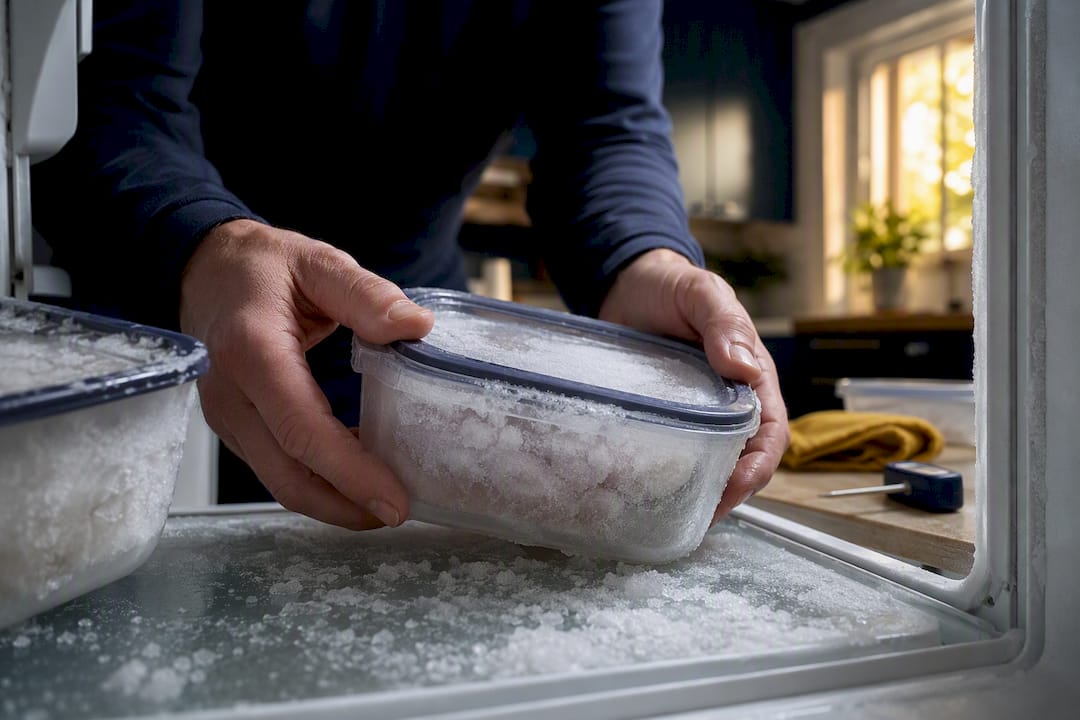
Measure your fridge’s internal temperature right now — most cases of fridge freezing food trace back to an incorrect setting or a blocked airflow path, not a dying compressor. Grab an appliance thermometer or set a glass of water inside for 24 hours, then move anything delicate (lettuce, milk, eggs) away from the back wall and vents while you troubleshoot. The target range is 37 to 40°F. Log what you find before touching any dials.
TL;DR:
- The root causes of fridge freezing food include low temperature settings, blocked air vents, worn door gaskets, and dirt on condenser coils, not necessarily a dying compressor.
- Troubleshooting steps such as adjusting temperature, clearing vents, power cycling, and performing a 24-hour water test are recommended before calling a technician.
- Persistent cold zones or ongoing freezing after these checks indicate specific component issues like faulty sensors or damper controls, requiring professional repair.
- Food that remains frozen or held below 40°F for over two hours is generally safe to refreeze; items above that temperature for more than two hours should be discarded.
- Routine maintenance, including thermometer checks, coil cleaning, gasket inspection, and proper food placement, can prevent future freezing problems.
Table of Contents
- Common Causes of Fridge Freezing Food and Fast Checks
- Step-by-Step Troubleshooting: Fastest Fixes First
- Is Frozen Food in the Fridge Still Safe to Eat?
- When Should You Call an Appliance Repair Technician?
- How to Prevent Your Fridge From Freezing Food Again
- Repair or Replace? A Realistic Way to Decide
- Get Your Refrigerator’s Cooling Fixed for Good
- Sources
- FAQ
Common Causes of Fridge Freezing Food and Fast Checks
Working through them in order saves you from replacing parts you didn’t need to touch.
- Temperature set too low. Digital panels sometimes get bumped to their coldest setting by accident; dial-style controls (often numbered 1 to 9, not degrees) confuse people into overcorrecting. Aim for 37 to 40°F on the display, or a middle dial setting, and adjust one notch at a time.
- Blocked air vents. Refrigerators push cold air through internal vents, and packing food against the back wall or stacking containers over a vent creates a localized freeze zone even when the overall temperature reads normal.
- Worn door gasket. A weak seal lets warm air in, so the compressor overworks and overcools nearby shelves trying to compensate. Close the door on a dollar bill or sheet of paper: if it slides out with no resistance, the seal issues documented by Whirlpool are likely at play.
- Ice maker left on with no water line. If the ice maker is switched on but disconnected, some units keep trying to cycle and overcool the compartment.
- Dirty condenser coils. Dust-caked coils (usually behind or beneath the unit) struggle to release heat efficiently, throwing off the whole cooling cycle. A quick visual check with a flashlight tells you if cleaning is overdue.
- Fridge too empty or too full. Food acts as thermal mass. A fridge that’s roughly 60% full holds a steadier temperature than one that’s nearly empty or crammed to the ceiling, both of which create erratic cold spots.
Crisper drawers and back-wall shelves are designed to run colder by nature, so some KitchenAid models let you dial down individual drawer humidity or temperature. If your delicate produce keeps freezing on a specific shelf, that shelf’s proximity to the vent, not the whole appliance, is probably the culprit.
Step-by-Step Troubleshooting: Fastest Fixes First
Work through this list in order. Each step tells you roughly how long to wait before judging whether it worked.
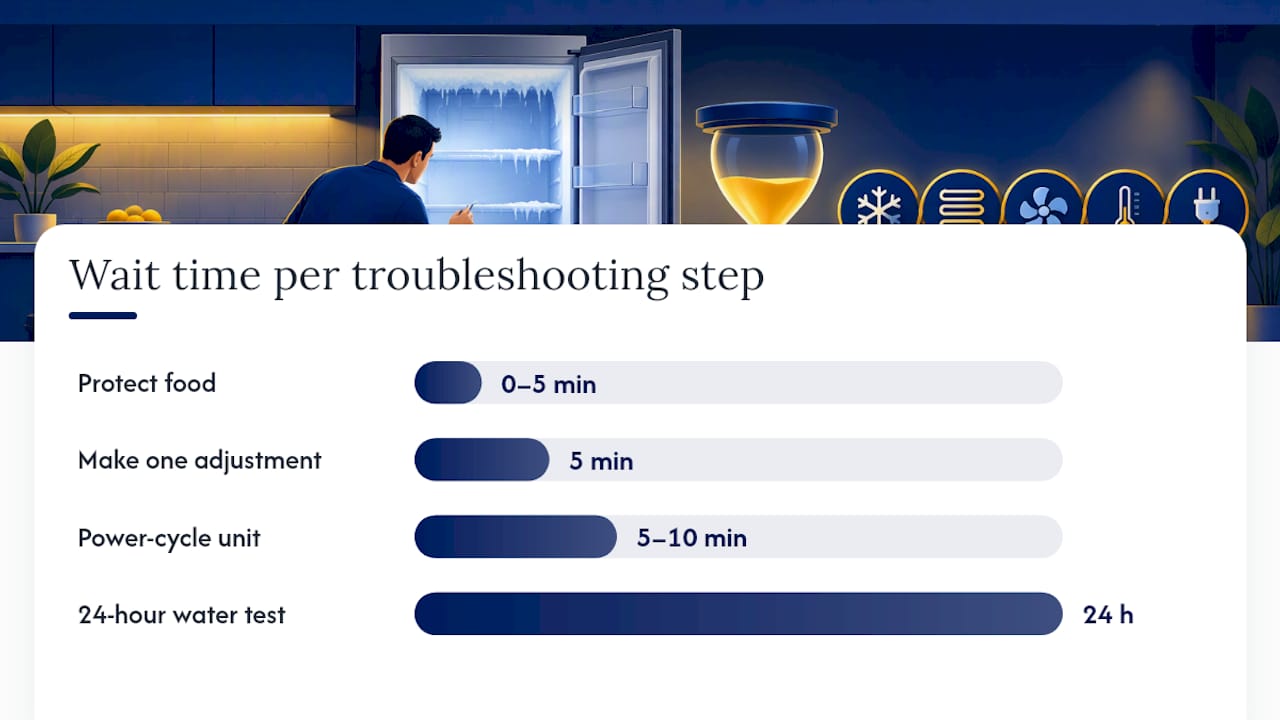
- Protect the food first (0 to 5 minutes). Move anything sensitive away from the back wall and vents. Place a thermometer in the center of the main compartment.
- Make one adjustment, not three (5 minutes). Raise the temperature by one notch, turn off the ice maker if it’s not hooked to a water line, and shift items blocking any vent. Don’t stack changes. You want to know which fix actually worked.
- Power-cycle the unit (5 to 10 minutes). Unplug it for a full minute, then plug it back in. This clears “demo” or “showroom” mode, a setting some units ship with that disables the compressor’s normal cycling and shows up as either no cooling or erratic overcooling. It also resets minor control-board glitches without needing a technician.
- Run the 24-hour glass-of-water test. Set a glass of water on the center shelf and check it a full day later. Manufacturer guidance recommends waiting this long because temperature adjustments take time to stabilize, often up to 8 hours between changes. If the water measures within 2°F of your set point, the fridge is working correctly and something else (like placement) caused the original freezing.
- If temps still run low after 24 hours, unplug the unit and inspect the condenser coils for dust, clean them with a vacuum brush attachment, and check whether the internal damper or air circulation fan is obstructed. Persistent cold zones in the same spot point to a specific part, not a general setting problem.
Pro Tip: Adjust the freezer control first if your model links freezer and fridge temperatures on one dial. Fridge overcooling often traces back to a freezer set too cold, and fixing that one control can solve both compartments at once.
Reddit’s appliance repair community backs this order up. Many reported cases of a fridge freezing everything resolved after nothing more than a control reset, a coil cleaning, or a gasket swap. Start cheap and simple before assuming the worst.
Is Frozen Food in the Fridge Still Safe to Eat?
The rule that matters here is straightforward: any perishable food held above 40°F for more than 2 hours should be thrown out, no exceptions for smell or appearance, according to USDA food-safety guidance. Freezing accidentally is a different problem than warming accidentally, and it’s the more forgiving one.
If food still has visible ice crystals, or you can confirm it stayed at 40°F or below the entire time, it’s generally fine to refreeze, though the texture and quality of things like leafy greens or dairy will suffer. Use your temperature log from the troubleshooting steps above to make that call with confidence instead of guessing.
Toss these items without hesitation if they sat above 40°F for more than 2 hours:
- Raw or cooked meat, poultry, and seafood
- Milk, soft cheese, and other dairy
- Prepared salads (egg, chicken, tuna, pasta)
- Cut fruit and leftovers with cream-based sauces
If the exposure was brief and the food stayed at or below 40°F, your safest moves are to cook meat immediately rather than storing it raw, keep your written temperature log for reference, and only refreeze items that meet the ice-crystal or cold-temperature standard above.
When Should You Call an Appliance Repair Technician?
Call a professional once you’ve run through the checks above and the problem keeps coming back, especially if it’s hitting both the fridge and freezer compartments. A compressor that runs constantly, unusual buzzing or clicking, or temperature swings that repeat every few hours despite a clean coil and a working seal all point past DIY territory.
Technicians typically check these components in order:
- Thermistor or temperature sensor accuracy
- Control board function (including hidden demo modes)
- Damper motor and evaporator fan operation
- Door gasket integrity and replacement need
Most visits start with a diagnostic fee and a firm quote before any repair begins. Sealed-system issues, meaning the compressor or refrigerant lines, tend to justify replacement over repair on older units, while sensor, fan, and gasket problems are usually straightforward fixes. Bring your temperature log, the model and serial number (usually inside the door frame), and a couple of photos of the affected area. That prep alone often cuts diagnostic time in half.
How to Prevent Your Fridge From Freezing Food Again
A little routine maintenance heads off most repeat problems before they start.
- Keep an appliance thermometer in the fridge permanently and glance at it weekly, plus immediately after any power outage or storm.
- Clean condenser coils every 6 to 12 months, and leave 1 to 2 inches of clearance around the coils or rear grill for airflow.
- Check the door gasket quarterly with the dollar-bill test; replace it as soon as it fails, since a worn seal drags down cooling efficiency for months before you notice.
- Keep vents clear and aim to keep the fridge around 60% full. Avoid parking milk, eggs, or produce directly in a vent’s airstream.
- Leave the ice maker off if it isn’t connected to a water line, and after any power cycle, check the control panel to confirm it didn’t default into a demo or showroom mode.
Pro Tip: Write your fridge’s ideal thermometer reading on a sticky note inside the door. It turns a monthly check into a five-second glance instead of a guessing game.
Repair or Replace? A Realistic Way to Decide
Age and repair history tell you more than the symptom itself. A fridge under seven or eight years old with a one-off sensor or gasket problem is almost always worth fixing. One that’s older, has needed two or three repairs already, or shows sealed-system symptoms like a failing compressor usually isn’t. In-home diagnosis backed by a solid parts-and-labor warranty takes the guesswork out of that decision, and it’s worth calling sooner rather than later. A few days of unnoticed overcooling can spoil an entire fridge’s worth of groceries.
— Rich
Get Your Refrigerator’s Cooling Fixed for Good
If you’ve worked through the checks above and your fridge is still freezing food, it’s time for a technician who can pinpoint the exact part causing it. Anothercycleappliance handles refrigerator repair, freezer repair, and ice maker repair throughout Southern New Hampshire, with in-home diagnostics and transparent pricing instead of a mystery bill at the end. Repairs often include a warranty on parts and labor for added confidence.
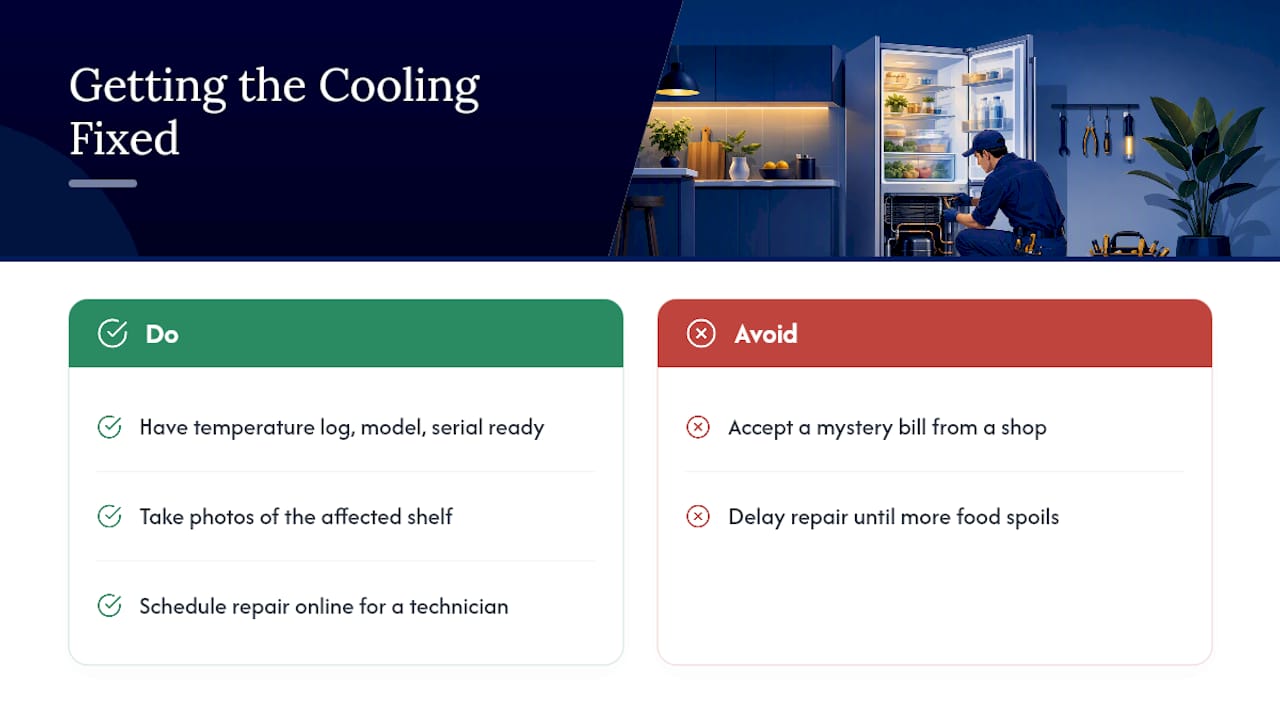
Before your visit, have your temperature log, the fridge’s model and serial number, and a couple of photos of the affected shelf ready. It speeds up diagnosis and often saves you money on the visit. If you’d rather stop future breakdowns before they start, the Platinum Appliance Care plan covers preventative checkups for $549 one-time. Schedule your repair online and get a technician out before more food ends up in the trash.
Sources
- Keeping food safe during emergencies | FSIS
- Why food freezes in your refrigerator — and how to stop it | Whirlpool
- Preventing Food from Freezing in the Refrigerator – Product Help | JennAir
FAQ
How do I fix my refrigerator from freezing food?
Start by checking the temperature setting, clearing any blocked vents, and testing the door gasket with the dollar-bill trick. If a 24-hour glass-of-water test still shows readings well below your set point after those checks, the sensor or control board is a likely next suspect, and that’s a job for a technician.
What does it mean if your fridge is freezing food?
It usually means either the temperature is set too cold, cold air is trapped against one spot by blocked vents or overpacked shelves, or a component like the ice maker, sensor, or gasket is malfunctioning. It rarely means the whole unit is failing.
What are the signs of a dying refrigerator?
Constant compressor running, loud buzzing or clicking noises, temperature swings that keep repeating despite clean coils and a good seal, and sealed-system symptoms like warm coils or refrigerant smell are the clearest signs. At that point, Anothercycleappliance’s refrigerator repair team can confirm whether repair or replacement makes more sense for the appliance’s age.
Is food still good if it freezes in the fridge?
Yes, in most cases. Food that still has ice crystals or that stayed at 40°F or below the entire time is generally safe to refreeze, though texture and quality may suffer. Anything that sat above 40°F for more than 2 hours should be discarded regardless of how it looks.