
An appliance repair warranty is the repair shop’s written promise to stand behind the parts it installed and the labor it performed. Demand it in writing before you authorize any work, and favor shops that commit to redoing a failed repair at no extra charge for parts or labor. The strongest versions of this promise run for an extended period covering both parts and labor. Some repair shops back their work with comprehensive coverage.
TL;DR:
- A comprehensive warranty should cover parts, labor, and workmanship for at least six months, with some shops offering up to a full year for added peace of mind.
- The warranty must be clearly written, specifying start date, duration, covered repairs, and contact information to ensure proper service and avoid misunderstandings.
- Always request a written estimate before repairs and keep detailed records, including photos of parts and signed repair orders referencing the warranty terms.
- If the appliance fails within the warranty, contact the shop immediately, and expect them to fix the issue at no extra cost for parts or labor; escalate if they refuse or deny coverage improperly.
- Federal laws prohibit shops from voiding warranties when you use third-party parts or technicians, as long as those were not provided free of charge.
Table of Contents
- What a Parts-and-Labor Warranty Actually Covers
- The Written-Warranty Checklist Before You Hire
- What to Ask Before the Technician Ever Shows Up
- If the Repair Fails: How to File a Claim
- Why We Back Every Repair With a Full Year of Coverage
- Book a Repair Backed by a Full Year of Parts and Labor Coverage
- Where This Guidance Comes From
- Sources
- FAQ
What a Parts-and-Labor Warranty Actually Covers
A genuine repair-shop warranty covers three things: the physical part that got swapped in, the labor it took to install it, and the quality of the work itself. If the part fails, or the technician’s workmanship causes the same problem to resurface, the shop fixes it again without billing you a second time.
Coverage components typically include:
- Replacement parts — the actual component the technician installed, guaranteed against defect for the warranty period.
- Labor — the cost of the technician’s time to diagnose and re-fix the issue if it’s warranty-related.
- Workmanship — a broader promise that the repair itself was done correctly, not just that the part didn’t fail.
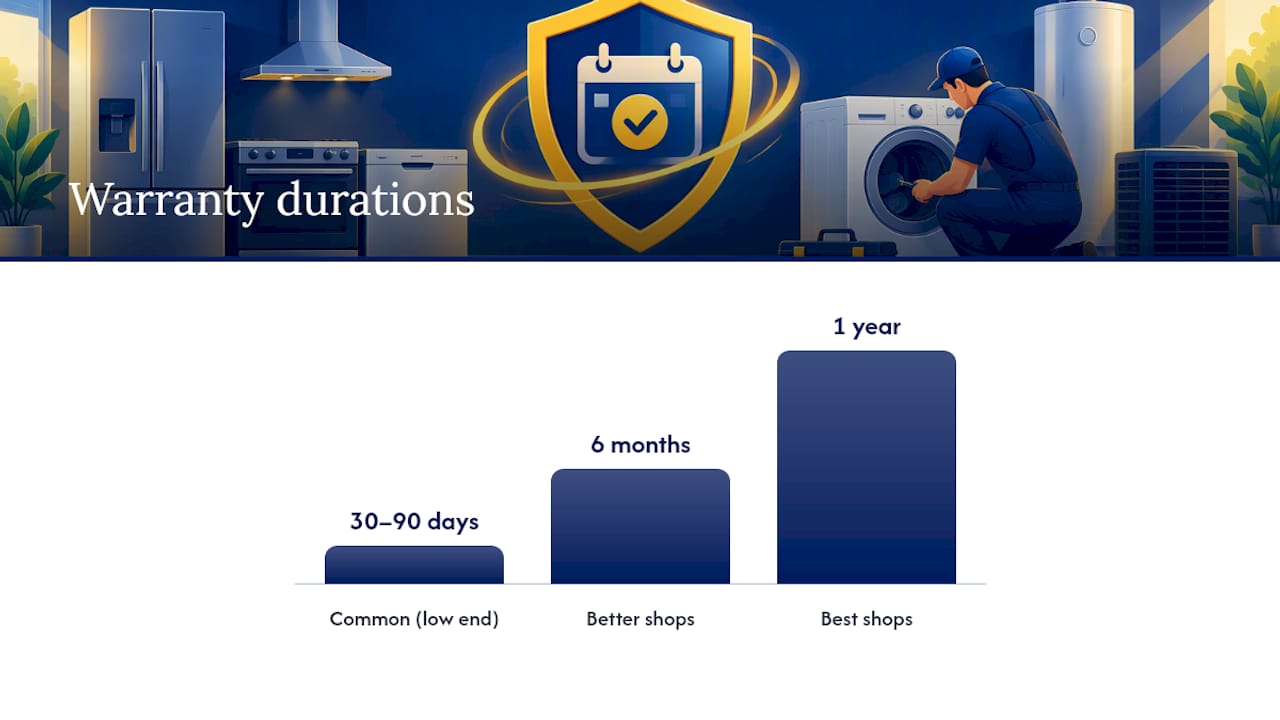
- Duration — commonly 30 to 90 days at the low end, with better shops offering six months to a full year.
Federal law kicks in once a warranty covers both parts and workmanship. At that point, it has to be disclosed in a single, clear document with a step-by-step process for getting warranty service, under the Magnuson-Moss Warranty Act. That’s not boilerplate. It means a shop can’t verbally promise you a year of coverage and then hand you a vague receipt with no terms spelled out.
There’s also a tying rule worth knowing. A repair company generally cannot void your warranty just because you later used an independent technician or a third-party part, unless it provided that part or service free of charge, according to FTC guidance on federal warranty law. If a shop tells you the warranty is void the moment anyone else touches the appliance, that claim doesn’t hold up under federal rules in most circumstances.
The Written-Warranty Checklist Before You Hire
Before you let anyone start unscrewing panels on your refrigerator, ask to see the warranty in writing. A shop that’s confident in its work will hand it over without hesitation. One that hedges or waves you off with “we always take care of our customers” is telling you something too.
The CFR’s disclosure rules spell out exactly what a compliant written warranty needs to include, and you can use this as your own comparison checklist:
- What’s covered and what isn’t. The document should name the specific parts and labor included, and state exclusions plainly (misuse, unrelated failures, cosmetic damage).
- Start date and duration. Coverage should begin on the date of repair, not the date you first called, and the length should be stated in a number, not a phrase like “a while.”
- Remedy options. The shop should specify whether it will re-repair, replace the part, or refund your money if the fix doesn’t hold.
- Claims contact information. A phone number or email dedicated to warranty issues, not just a general dispatch line.
- Estimate and authorization terms. Ask when the service call fee applies, and whether the shop will call before adding charges beyond the original estimate.
Pro Tip: Ask the shop to write “per warranty terms dated [X]” directly on your repair order. That single line ties your paperwork to the warranty document and makes a future dispute much harder to wriggle out of, for either side.
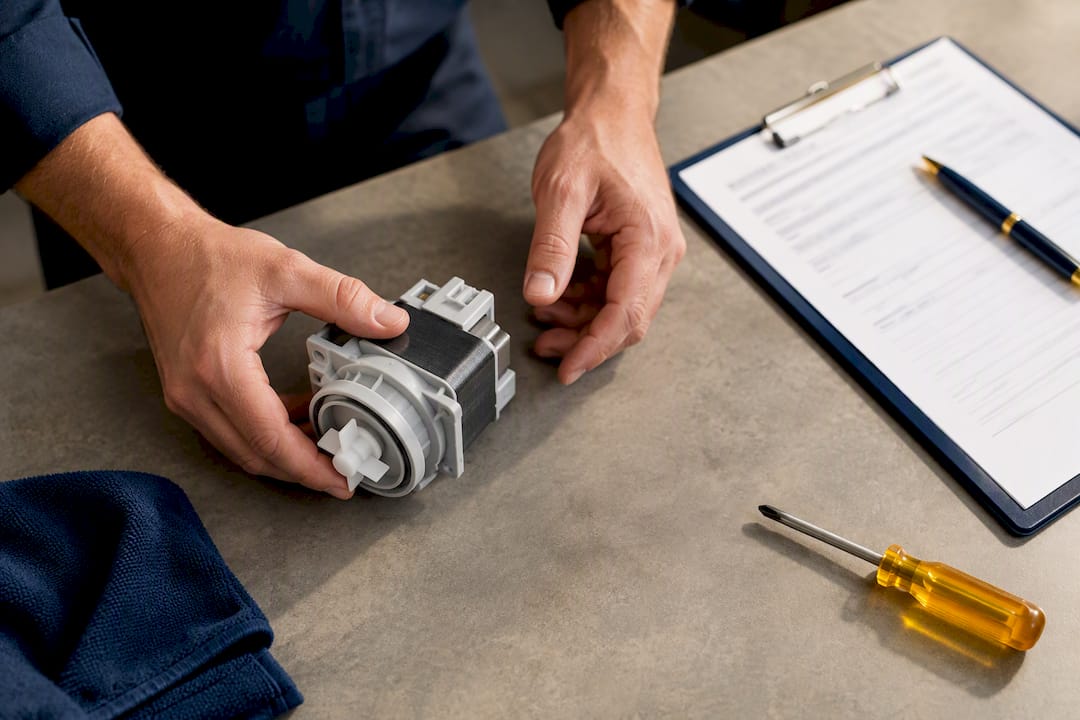
Also ask whether they’ll retain the old, failed part for your records, or at least let you see it before it’s disposed of. A signed repair order that references the warranty by name, with the technician’s signature, is the single strongest piece of paper you can hold onto.
What to Ask Before the Technician Ever Shows Up
The scheduling call is where you set the terms, not the day of the repair. A few direct questions on the phone save a lot of arguing later.
When you call to book, ask:
- Is your warranty written down, or is it a verbal policy?
- What exactly does it cover: parts, labor, or both?
- How long does the coverage last?
- Will you retain the old part, or can I keep it?
- Who do I contact if something fails during the warranty period?
Consumer advice groups consistently recommend getting a written estimate before work begins, and insisting the shop calls you for authorization if the real cost runs higher than quoted. That’s not a nice-to-have. It’s the difference between a $150 diagnostic fee and a surprise $400 bill for parts nobody approved.
Once the technician arrives, keep a simple paper trail:
- A written estimate before repairs start.
- A signed repair order listing the parts used, labor performed, technician’s name, and the appliance’s model and serial numbers.
- A photo of the old part before it’s removed, and another after the new one is installed.
- An email or text confirmation of the warranty terms, even if it just restates what’s on the paper.
None of this takes more than a few minutes, and it’s the evidence you’ll need if the appliance acts up again three months later.
If the Repair Fails: How to File a Claim
A real parts-and-labor warranty means you don’t pay again if the same problem comes back. Here’s the process to expect, in order.
- Contact the shop immediately. Give them your repair order number, describe exactly what’s failing, and ask specifically for a warranty visit, not a new service call.
- Know your expected remedy. A legitimate warranty means the shop redoes the repair at no added cost for parts or labor, swaps in a new part if the original was defective, or refunds you if a fix genuinely isn’t practical. Consumer reporting on appliance repair backs this up: a reputable shop returns to fix the same problem at no extra charge during the coverage window.
- Escalate if they refuse. Get the denial in writing, keep every email and text, and if the shop won’t budge, your next stop is your state’s consumer protection office or a complaint citing FTC warranty disclosure guidance. A repair company that ignores its own written warranty is violating the terms it agreed to.
Most disputes never get this far. They happen when the original warranty was never put in writing to begin with, which is exactly why the paperwork step earlier in this guide matters more than it seems.
Why We Back Every Repair With a Full Year of Coverage
Some companies have worked on refrigerators, washers, dryers, and ovens across Southern New Hampshire for many years. That kind of run doesn’t happen without repeat customers who trust the work enough to call again.
A one-year warranty on parts and labor isn’t a marketing line here. It’s a practical bet: most repair failures that are going to recur show up well within twelve months, so covering that whole window gives homeowners real peace of mind instead of a 30-day window that expires before anything has a chance to go wrong. If a part fails or the same issue resurfaces, the follow-up visit costs nothing extra in parts or labor.
— Rich
Book a Repair Backed by a Full Year of Parts and Labor Coverage
Some local repair outfits provide a full year of parts-and-labor coverage, spelled out in writing, as detailed in their réparation et service de fournaise Montréal Laval. When booking a repair service, customers may receive a transparent estimate before work starts, a written warranty, and the option to see the old part. Details on exactly what’s covered are on the one-year parts and labor warranty page.
If your refrigerator, washer, dryer, or oven needs attention, schedule service online or check the full list of repair services to confirm coverage for your appliance. Homeowners who want ongoing protection between repairs can also look at the Platinum Appliance Care plan for $549 one-time.
Where This Guidance Comes From
- Magnuson-Moss Warranty Act — sets the disclosure requirement for any warranty covering both parts and workmanship.
- FTC’s businessperson’s guide to warranty law — explains the tying prohibition and what shops can and can’t require.
- 16 CFR Part 701 — defines exactly what a written warranty disclosure must include.
- FTC consumer warranty guidance — frames warranty terms as part of the purchase decision, not an afterthought.
Sources
- 15 U.S.C. §2302 (prelim.) – Magnuson-Moss Warranty Act (US Code reference)
- Businessperson’s guide to federal warranty law | Federal Trade Commission
- 16 CFR Part 701 — Disclosure of written consumer product warranty terms and conditions
- Warranties | Consumer Advice (FTC)
FAQ
What Is an Appliance Repair Warranty?
It’s the repair shop’s written promise to cover the parts it installed and the labor it performed if the repair fails within a set period. The strongest versions run parts and labor together for up to a full year, which is what Another Cycle Appliance Repair offers on its repairs.
How Is a Repair Warranty Different From a Manufacturer’s Warranty?
A repair warranty comes from the shop and covers the specific fix it performed. A manufacturer’s warranty comes from the appliance maker and covers defects in the original product, regardless of who repairs it.
What Should I Do if My Repair Fails During the Warranty Period?
Contact the shop right away with your repair order number and a description of the problem, and ask specifically for warranty service. A legitimate warranty means you shouldn’t pay again for the same parts or labor, per FTC guidance on warranty disclosure.
Can a Shop Void My Warranty if I Use a Different Repair Company Later?
Generally, no. Federal guidance prohibits conditioning a warranty on using only the original shop’s parts or service unless those were provided free, according to FTC rules on tying practices.
How Much Does Another Cycle Appliance Repair Charge?
Pricing depends on the appliance and the repair needed, and current rates are listed directly on the service pages. The Platinum Appliance Care maintenance plan is priced at $549 one-time.